WhatsApp
+66-957-269-990
- info@gosamuitours.com


Everything you need for a good visit to Wat Phra Yai, the Big Buddha of Koh Samui: what you will see, when to go, what to wear and how to fit it into a day on the island.
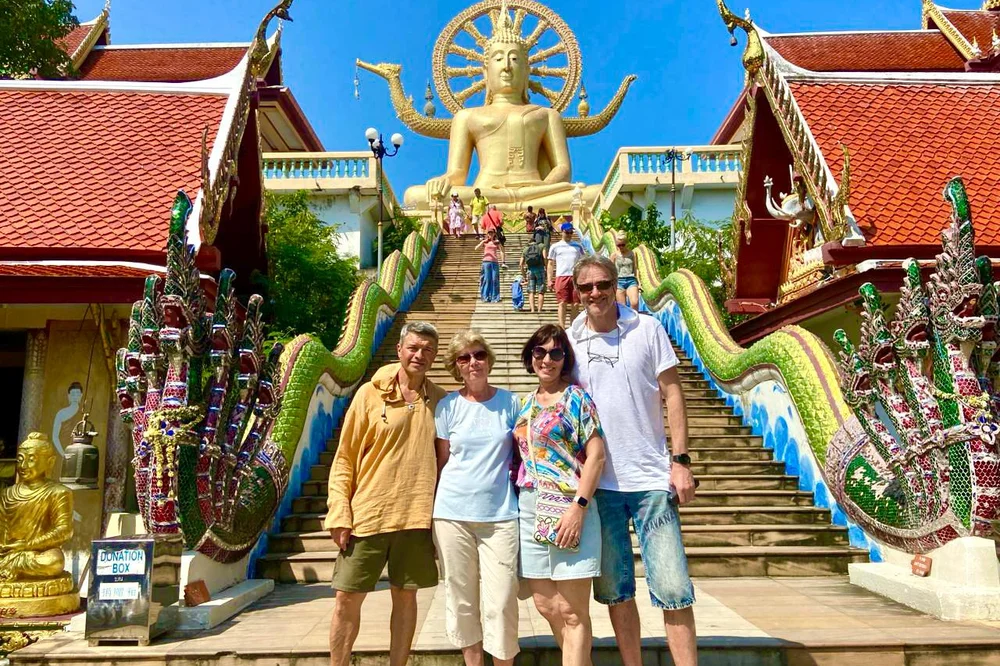
You see it before you know what it is: a flash of gold on the coast as your plane drops towards Samui airport. That is the Big Buddha, and a visit to the Big Buddha Koh Samui temple is one of the few sights on the island that nearly everyone fits into their trip, even people who came only for the beach.
It is a short, easy visit, and that is part of its charm. But timing and clothing matter more than people expect, and a bit of local knowledge turns a quick photo stop into something you actually enjoy. Here is what I tell friends before they go.
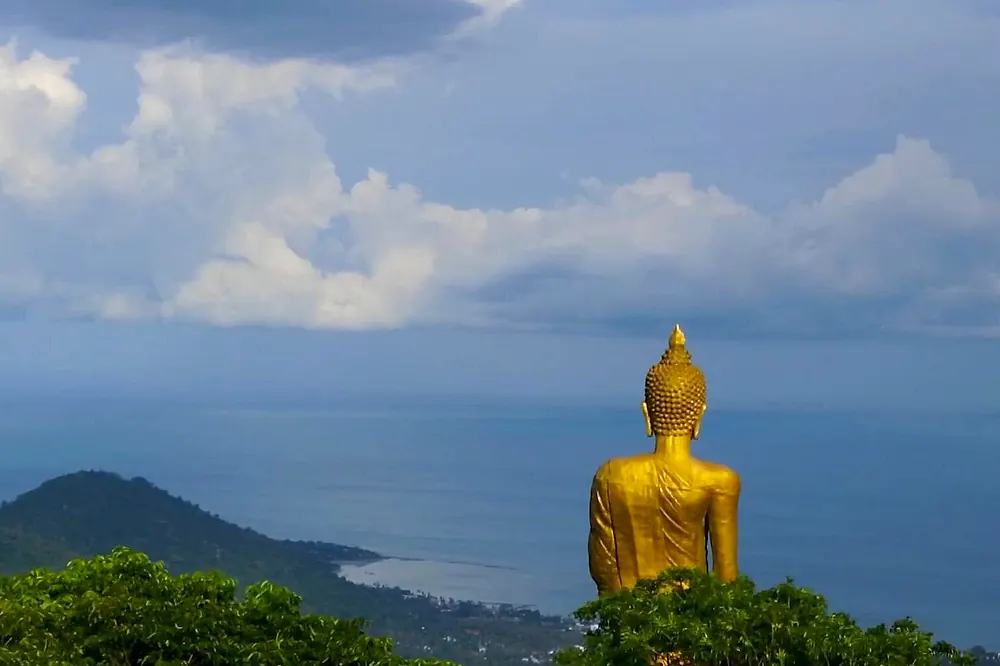
The Big Buddha, or Wat Phra Yai in Thai, is a large golden statue of a seated Buddha on the northeast corner of Samui. It stands about 12 metres tall on Koh Faan, a tiny island joined to Samui by a short causeway, and it is the most recognisable landmark on the island.
"Phra Yai" simply means "big Buddha", and the temple has been here since the early 1970s. Before the airport and the resorts, Koh Faan was a quiet spot by the sea, and the statue was built as a place of worship for local people. It still is: you will see Thai families bringing flowers, incense and offerings, especially on Buddhist holidays.
The Buddha sits in the classic pose of calling the earth to witness, with the right hand pointing down to the ground. It recalls the moment of the Buddha's enlightenment, when he called on the earth as his witness against the demon Mara. It is one of the most common poses in Thai temples, so you will recognise it again all over Thailand.
The beach next to it is named after the statue: Big Buddha Beach, also called Bangrak. That whole area, between the airport and the fishing villages of the northeast, is one of the easiest parts of the island to reach from Chaweng, Choeng Mon or Bophut.
The visit has three parts: the stairs, the platform around the statue and the small temple area at the bottom. Most people spend well under an hour here, so it is a stop, not a half-day outing.
The main staircase is lined with naga, the long serpent-dragons that guard Thai temples. Their bodies form the handrails and their heads rear up at the bottom, which makes a great photo from below. The climb is short, but on hot tiles and bare feet it feels longer than it is.
At the top, a wide platform runs right around the statue. Along the edge hang rows of bells, and visitors ring them for good luck as they walk around. Thai people usually walk clockwise, keeping the Buddha on their right, and it is a nice touch to do the same.
From the platform you look out over the sea, the causeway, the boats in Bangrak bay and on a clear day the outline of Koh Phangan. Planes take off and land just behind you, so do not be surprised by the roar overhead. It is one of the odd, very Samui details of the place.
At the foot of the stairs there are smaller shrines, statues of the different Buddha postures for each day of the week, and spots to light incense or make a donation. If you are curious, find the statue for the day you were born; Thai people often make a small offering there.
Cover your shoulders and knees, and take your shoes off before you climb. Wat Phra Yai is an active temple, not a tourist attraction with a statue, and the dress code is the same as at any Thai temple.
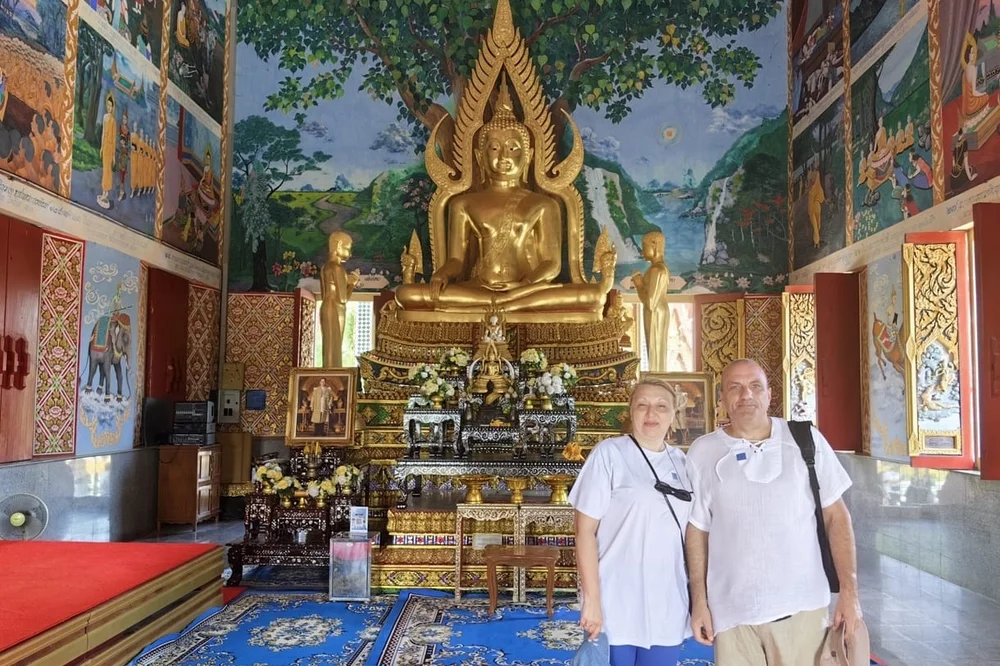
In practice that means a T-shirt rather than a tank top, and shorts or a skirt that reach the knee. Swimwear, very short shorts and see-through beach cover-ups are not suitable. Sarongs are usually available to borrow or rent at the bottom if you arrive straight from the beach, but it is easier to bring your own scarf.
Here are the simple rules that keep you on the right side of temple etiquette:
None of this is strict in a scary way. The people who look after the temple are used to tourists and are kind about it. But dressing properly is a small sign of respect, and you will feel more comfortable among Thai families who are there to pray.
Go early in the morning or in the late afternoon. Around midday the tiles on the stairs and platform get hot enough to hurt bare feet, the sun reflects off the gold, and this is also when most tour groups arrive.
My favourite time is just after sunrise. The light on the statue is soft, the platform is almost empty, and you can hear the bells instead of other visitors. By mid-morning the first vans and scooters start to arrive, and from late morning it is busy.
Late afternoon is the second-best choice. The heat drops, the light turns warm, and you can finish with dinner at one of the restaurants along Big Buddha Beach or in the nearby fishing village area. Sunset is not directly behind the statue, but the golden hour still makes it glow.
| Time of day | Heat | Crowds | Good for |
|---|---|---|---|
| Early morning | Comfortable | Very few people | Photos, a quiet visit, monks and locals |
| Late morning | Hot | Growing | Fitting it into an island tour |
| Midday | Very hot, burning tiles | Busiest | Best avoided if you can |
| Late afternoon | Easing off | Moderate | Warm light, combining with dinner nearby |
| Evening | Pleasant | Quiet | A short look at the lit statue from below |
If your only option is midday, do it anyway, but be smart: wear a hat on the way up, walk on the shaded side and keep the visit short. Many tours pass by around then, so it is normal, just not ideal.
Weather matters less than heat here. A light shower actually cools the tiles and clears the crowds, so a cloudy morning in the rainy season can be the best visit of all. Just watch your step on wet stairs, as the tiles get slippery.
Buddhist holidays and weekends bring more Thai visitors. That makes it busier, but also more interesting, with flowers, candles and families making merit. Do not let it put you off.
At the foot of the temple there is a row of souvenir shops, small food stalls and drink sellers. It is a good place for a cold coconut and a cheap snack, but not the best place on Samui for serious shopping.
You will find sarongs, elephant trousers, wooden carvings, Buddha figures, magnets and T-shirts. The stalls open from morning into the evening, though some close early on quiet days. Prices are tourist prices, and gentle bargaining is normal at the clothes and souvenir stalls. Smile, offer less, and settle somewhere in the middle; there is no need to haggle hard over small amounts.
The food side is better. Look for fresh coconuts, mango, grilled snacks on sticks and coconut ice cream, which is one of the best cheap treats on the island. A cold drink after a hot climb is the main reason people linger here.
One thing to know: Buddha images are sacred in Thailand, and taking large Buddha statues out of the country can need permission. Small souvenirs are fine, but do not buy a Buddha head as a decoration piece, and never put one on the floor.
Easily: Wat Plai Laem is only a few minutes away by car along the coast road, and almost everyone visits the two together. It is a different style of temple, colourful and playful, and it is the better photo spot of the two.
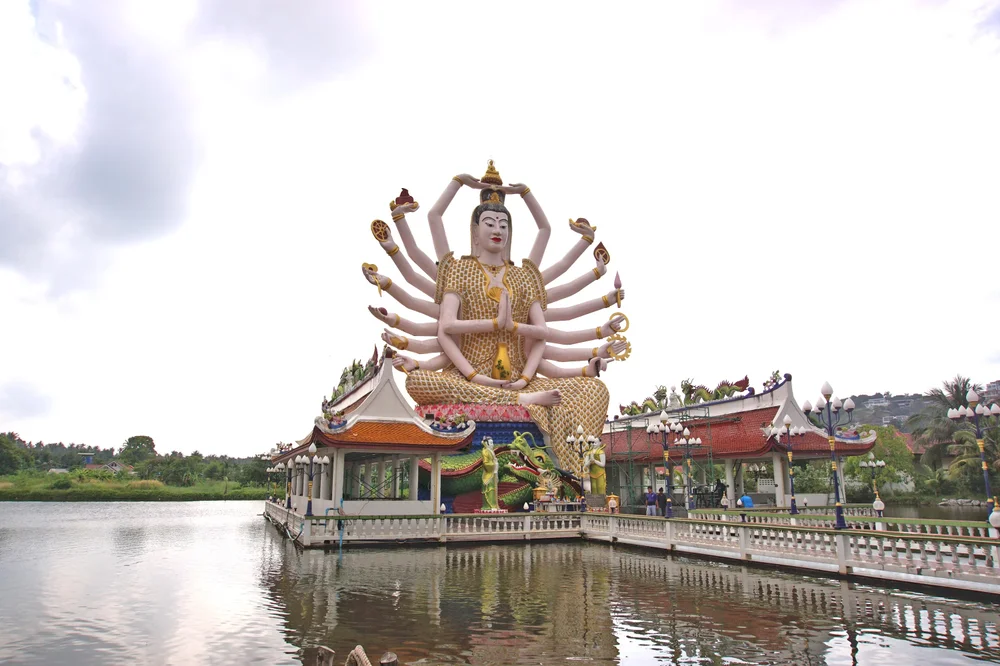
The star of Wat Plai Laem is a huge white and gold statue of Guan Yin, the goddess of mercy, with 18 arms, standing on a platform in a lake. Next to it is a cheerful laughing Buddha, and around the water there are temple buildings with bright painted details. You can feed the fish in the lake, which kids love.
The temple mixes Thai and Chinese traditions, which is part of what makes it so photogenic. It deserves its own guide, and it will get one, so here I will just say: do not skip it. If you only have time for one, Plai Laem is more beautiful, the Big Buddha is more iconic.
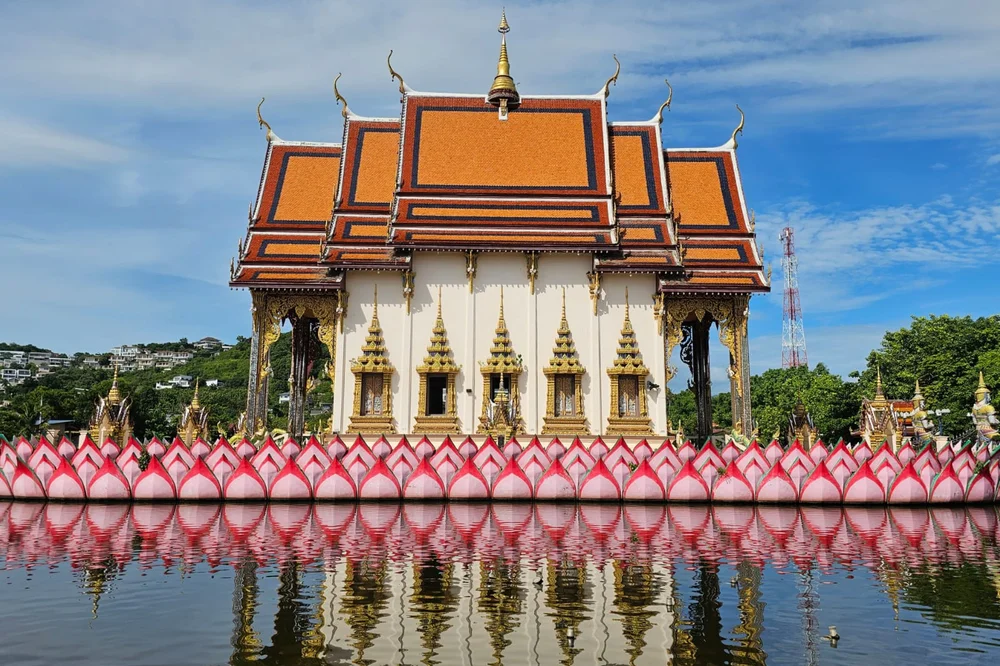
A simple loop for a free morning: Big Buddha at sunrise, Wat Plai Laem straight after, then breakfast in Bophut or at one of the cafes in the northeast. You will be done before the heat sets in, with the rest of the day free for the beach.
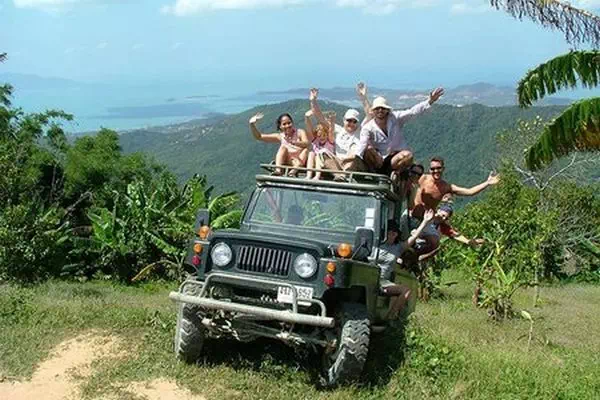
The Big Buddha is on the standard island-tour route, so you can visit on your own or as part of a day trip. The Military Jeep Safari from ฿1490 includes the Big Buddha temple, with hotel transfer and a Thai lunch, so you see it without arranging transport.
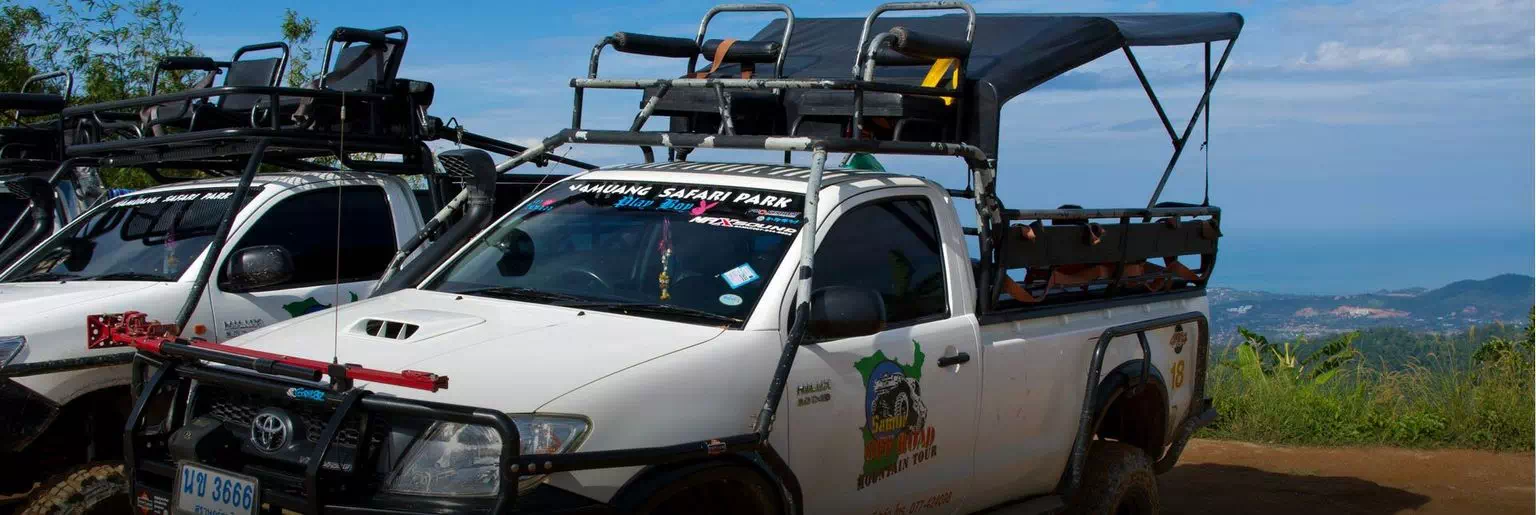
The Military Jeep Safari with Mr. Ung uses 4x4 army jeeps and also takes in the mummified monk at Wat Khunaram, a waterfall swim, the Secret Buddha Garden in the hills and the Big Buddha. It is a full island day for people who want temples, nature and a bit of adventure together, not just a photo stop.
The Koh Samui Jeep Safari, also from ฿1490, is a full-day island tour through jungle, waterfalls, viewpoints and Buddhist temples, with transfer and lunch. Check the current route on the tour page if the Big Buddha itself is the stop you care most about.
The Secret Buddha Garden on the Military Jeep route is worth a mention on its own. It is a quiet hillside garden of statues made by a local farmer, deep in the jungle high above the coast, and it feels like the opposite of the busy Big Buddha platform. Seeing both on the same day shows you two very different sides of Buddhism on Samui.
Both jeep tours suit first-time visitors who want to see the main sights of Samui in one day and do not want to ride a scooter in traffic. Families and couples like them; serious photographers who want empty temples at sunrise should go on their own instead.
If you prefer to go by yourself, the Big Buddha is easy to reach by taxi, scooter or a hired car with driver from Chaweng, Bophut or Choeng Mon. Parking is right by the stalls. For more ideas on how to plan your days, see the best tours in Koh Samui.
A visit is cheap and simple, and a few small things make it better. Bring a scarf, small cash and flip-flops, and you are ready.
If you want to fill the rest of your stay with sea days, temples and jungle, the full list of trips is on the Go Samui Tours home page, and you can ask any question on WhatsApp before you book.
Entry to the temple grounds is usually free, and visitors can leave a donation if they wish. You may pay small amounts for things like incense, flowers or a sarong. Check on the day, as arrangements can change.
Most people need less than an hour, including the climb, the walk around the platform and a drink at the stalls. Add another hour if you combine it with Wat Plai Laem nearby.
Yes, if they reach your knees and your shoulders are covered. Very short shorts and swimwear are not suitable. Sarongs are usually available at the bottom if you need one.
It is very close, just a few minutes by car from Samui airport. That makes it an easy stop on your first or last day, but keep your luggage safe in the car while you visit.
Yes, as a short stop. It is the island's best-known landmark, the views from the platform are lovely and it is easy to combine with Wat Plai Laem. Do not plan a whole day around it.
Yes, it is fine for children of any age. The stairs are short, though the tiles can burn small feet in the middle of the day. Kids usually enjoy ringing the bells and feeding the fish at Wat Plai Laem afterwards.
You can usually see the statue lit up from below in the evening, but the temple is quieter and some parts may be closed. For a proper visit go in the early morning or late afternoon.
Hotel pickup, insurance and a licensed local operator. Ask us anything on WhatsApp before you book.
Updated 3 November 2026.