WhatsApp
+66-957-269-990
- info@gosamuitours.com


How Na Muang 1 and Na Muang 2 really differ, how hard the walk to the upper fall is, where you can swim, and when the water is worth the trip.
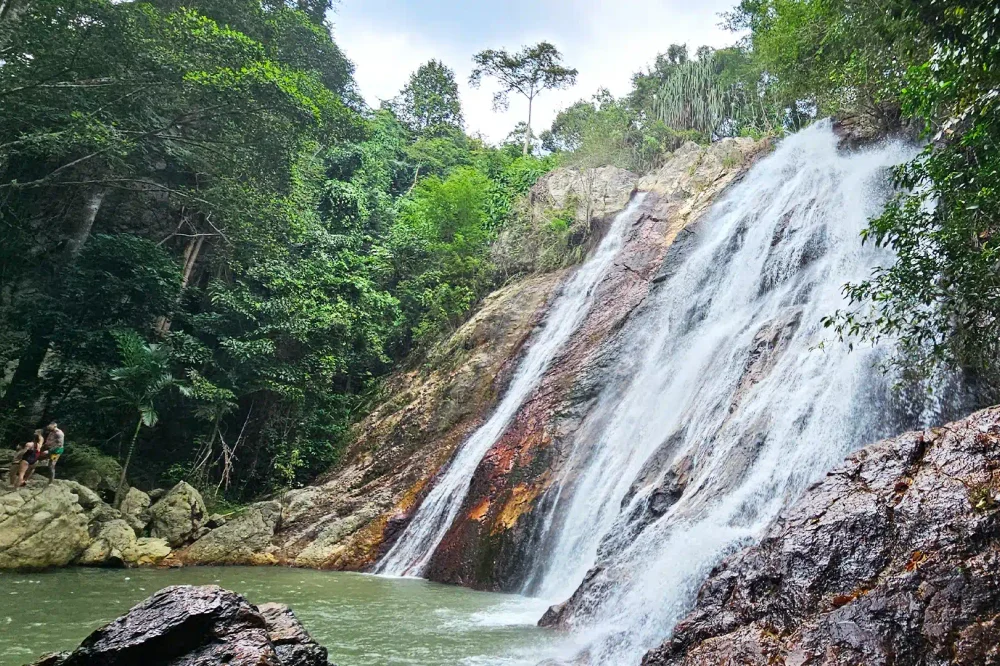
By eleven in the morning, the heat on the south side of Samui starts to feel personal, and the beach stops being the answer. That is when I head inland to the Na Muang waterfall, where the air under the trees is noticeably cooler and the first pool is only a few minutes from the parking area. The real decision comes after that swim: do you stay put, or climb to the upper fall?
You will see it spelled Na Muang, Namuang and Na Mueang on signs and maps, and they are all the same place. Here is how I would plan a visit, including when to skip the climb.
Na Muang 1 is the lower, easy and popular fall with the large swimming pool, while Na Muang 2 is the much taller fall higher up, reached by a steep walk. For most visitors Na Muang 1 alone is enough, and I would not feel guilty about stopping there.
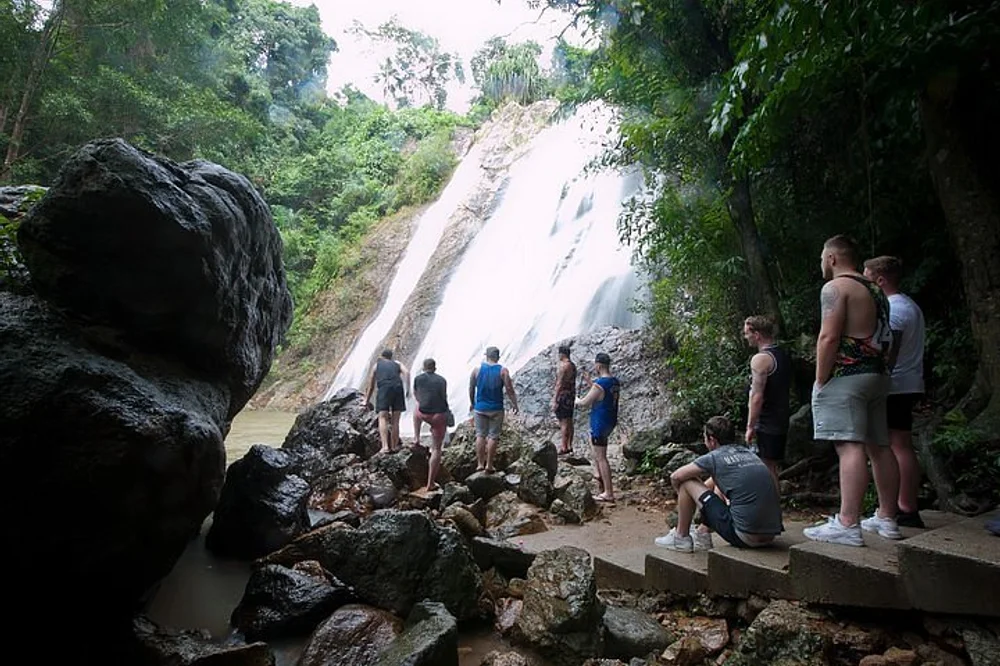
Na Muang 1 is usually quoted at about 18 metres. Its wall of reddish rock looks good from below, and on a full-flow day the sound fills the whole clearing. You get all of this for almost no effort, which is why it is busy.
Na Muang 2 is usually quoted at about 80 metres, though you never see it all in one neat view. It comes down in several tiers through the forest, and the walk gets you close to some of them. There are smaller pools up there rather than one big swimming area, and far fewer people.
| Na Muang 1 | Na Muang 2 | |
|---|---|---|
| Effort | Short and easy walk | Steep trail or steps |
| Height | About 18 metres | About 80 metres, in tiers |
| Swimming | Large pool at the base | Smaller pools |
| Crowds | Busy from late morning | Much quieter |
| Good for | Families, older visitors, tour stops | Fit walkers with time to spare |
If you only have a short stop, choose the lower fall and enjoy the water. If you want a proper walk and do not mind sweating, add the upper one. Doing both in a single morning is perfectly realistic if you are fit and the trail is dry.
It is a short but properly steep climb, and after rain it is slippery enough that I would turn around rather than push on. Allow about half an hour each way from the lower area, and more if the trail is wet or you stop a lot. Flip-flops are the single worst choice you can make on this trail.
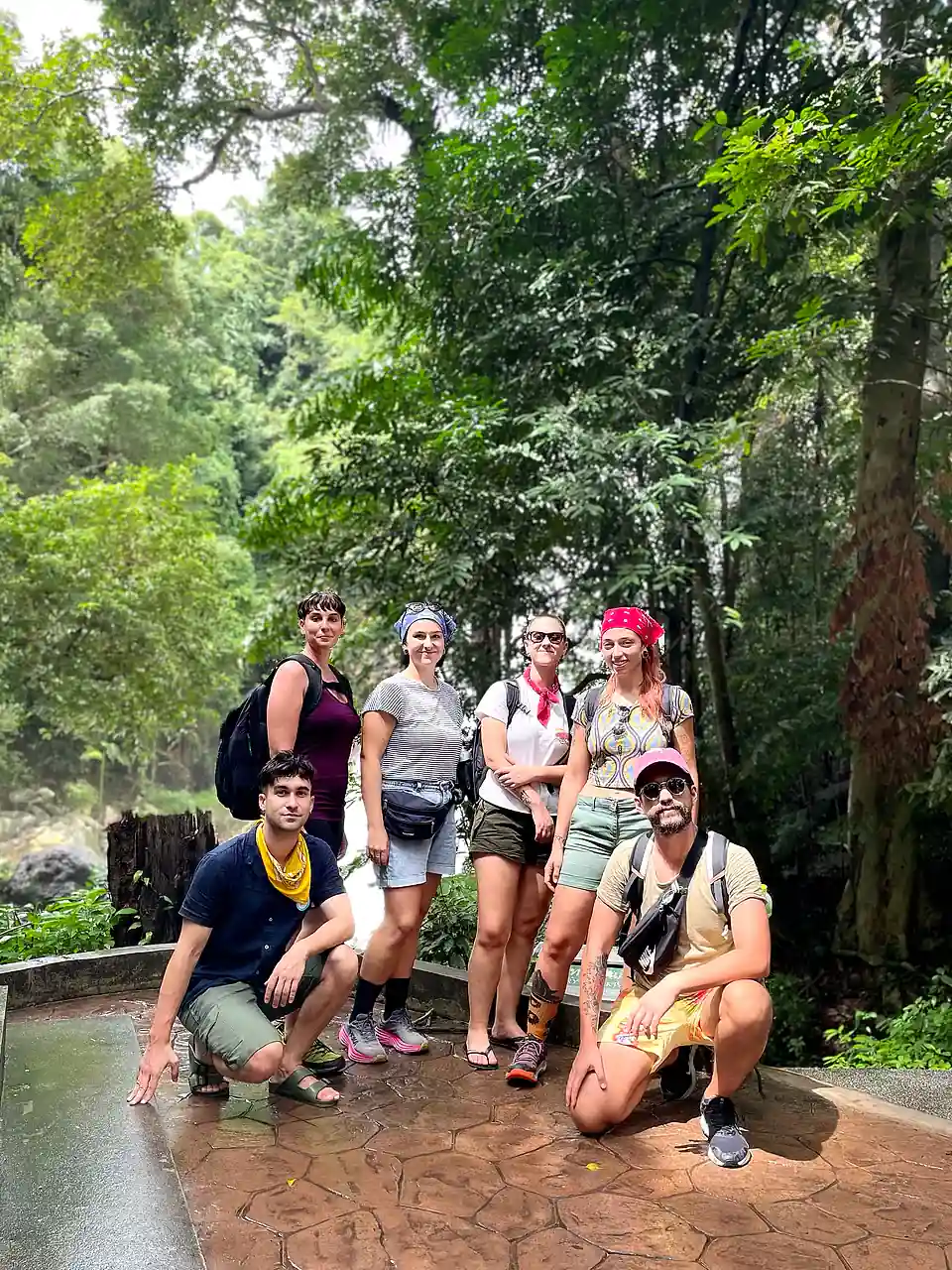
The trail climbs through forest over roots, packed earth and rock, and parts of it can be muddy for days after a storm. Humidity makes it feel harder than the distance suggests. People who walk happily at home often arrive at the top surprised by how much they have sweated.
A separate road goes higher up the hill, with parking nearer the upper fall. It shortens the walk, but you still have steep steps and uneven ground at the end. Road conditions and signs change, so ask locally or check on the day before you rely on it.
Coming down is where people slip, not going up. Take it slowly, keep your hands free and do not carry a bag in one hand. If you are with young children or anyone with knee trouble, skip the climb. Na Muang 1 will not disappoint them.
My rule for turning back is simple: if the ground is already mud and you are pulling yourself up by the roots, stop there. The waterfall will still be there next week, and a twisted ankle would also end your plans for the jet ski or the zipline.
Yes, you can swim at the pool at the base of Na Muang 1, and it is the main reason people come. The water is cool and refreshing, a real change from the warm sea, and it stays comfortable even when the air is not.
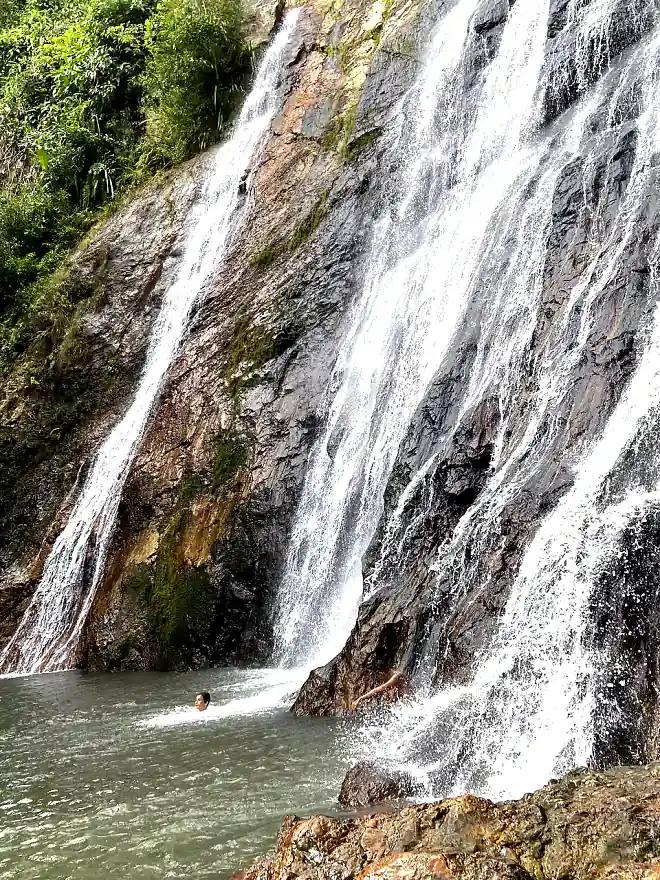
Always check the water before you get in: clear and calm is fine, but brown and fast means stay out. Heavy rain upstream can change a pool quickly, and water that looks gentle at the edge may pull harder under the fall. I would not stand directly beneath the falling water at high flow either, as stones and branches can come down with it.
The bottom is uneven, with rocks and sand, and depth changes quickly. Enter slowly rather than jumping, even if you see someone else doing it. Do not assume there is a lifeguard. Watch your own children and non-swimmers closely.
At Na Muang 2 the pools are smaller and it can be pleasant to cool off after the climb, but only where the flow is gentle. Do not swim near the edge of a drop. Pick your spot from the side, and leave it alone if you cannot see the bottom.
The rocks are the real hazard here: wet granite with a layer of algae is as slippery as soap. Nearly all the trouble I have heard of at Samui's waterfalls comes from people climbing for a photo or walking around in the wrong shoes.
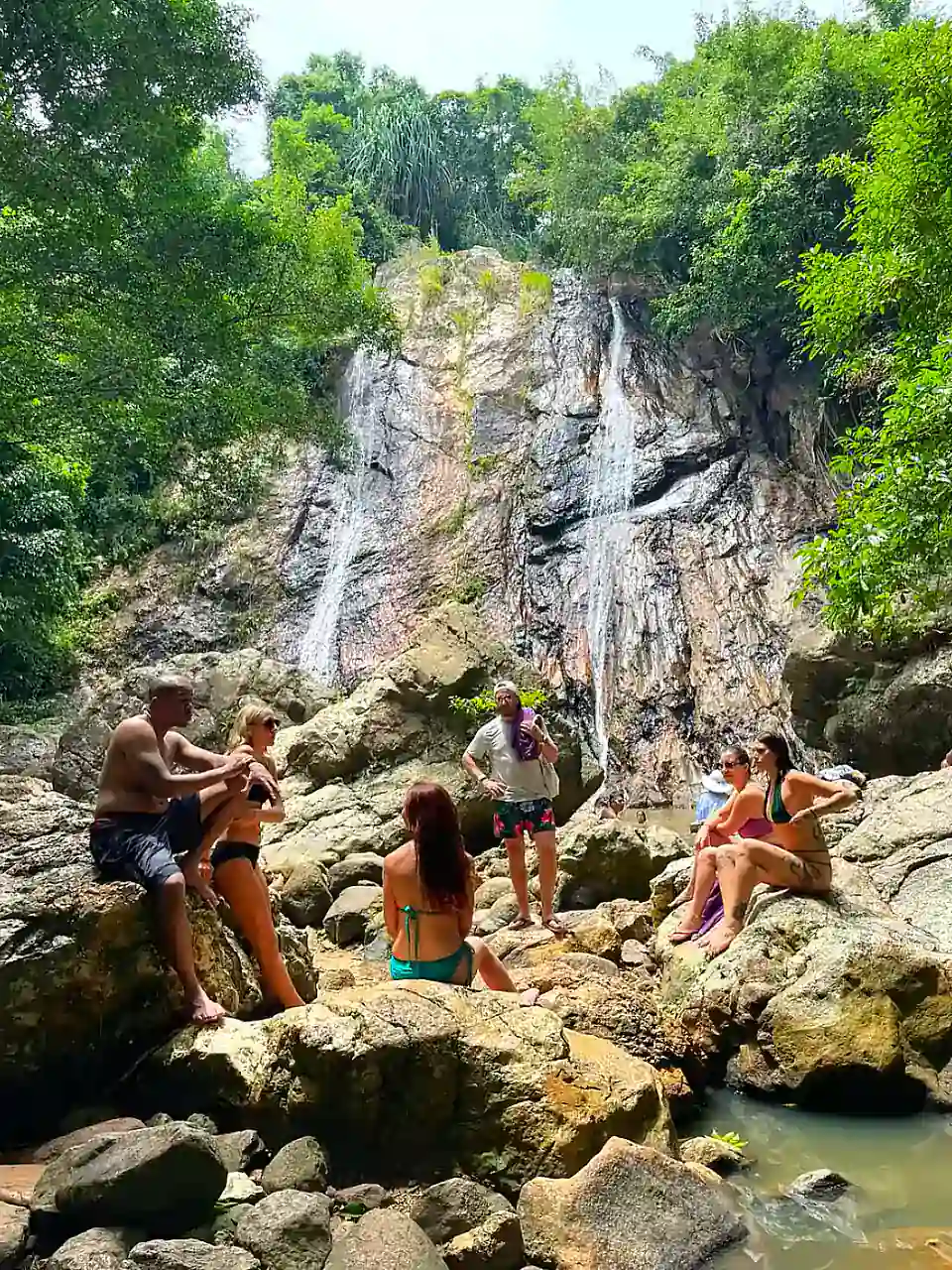
A few simple rules cover most of it:
Mobile signal and help can be slow in the forest, so do not treat this like a hotel pool. A small first aid kit weighs nothing, and mosquito repellent is useful too. Rain or heavy shade also makes the trail dark earlier than you expect, so do not start the upper walk late in the afternoon.
The fall looks its best from about October to January, when the rainy season fills it, but the trail is also at its worst then. My favourite window is a dry spell a few days after rain, when there is plenty of water and the trail has had time to drain.
In the rainiest weeks, usually around November, the fall can be huge and brown, and swimming may be a bad idea. For the wider weather picture, read what November on Koh Samui is really like. It is a great time for a look and some photos, but not always for a swim.
From about February into summer, the water level usually falls, and in the driest stretches Na Muang 2 can be thin. Na Muang 1 usually keeps enough water for a swim, but it is less impressive, and the pool feels smaller. Rain patterns differ from year to year, so check on the day if the flow matters to you. This month by month weather guide will help you plan around it.
As for time of day, come before about ten in the morning, or later in the afternoon. Tour groups and day visitors tend to fill the lower pool in the middle of the day. Early arrivals also get cooler air for the climb.
The falls are in the hills in the south-central part of the island, inland from the road between Lamai and Nathon, and they are signposted from the ring road. You can reach them by rented car, scooter or taxi. If you ride a scooter, go gently on the side roads after rain.
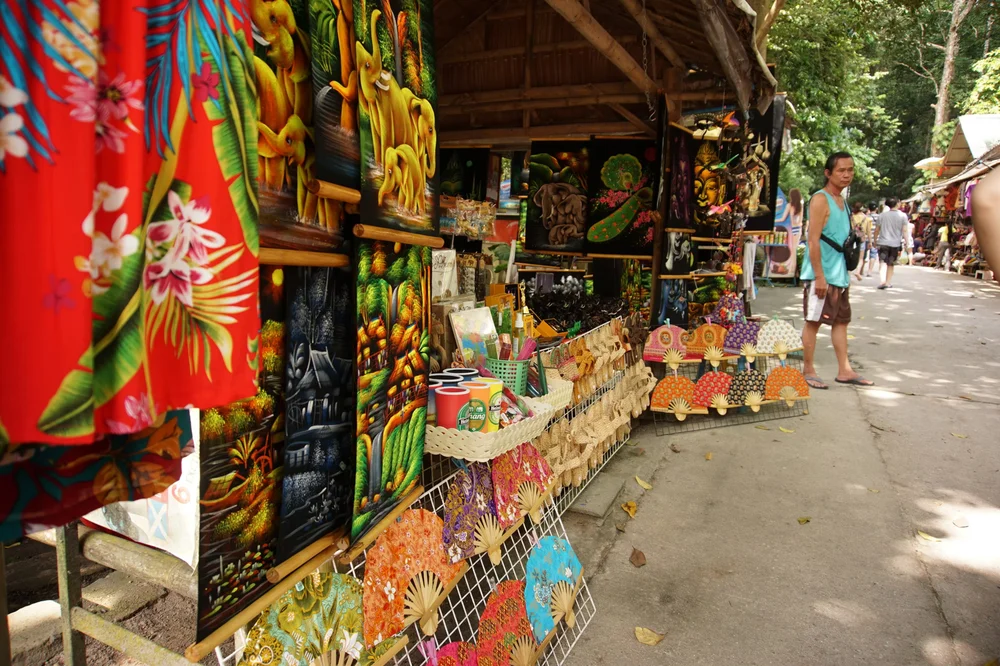
There are stalls near the parking area for drinks, snacks and souvenirs. Entrance and parking arrangements can change, so bring small cash and check on the day. Food options are simple, so do not count on a proper meal here.
A taxi is the awkward option, because you need the driver to wait or come back for you. Agree on that clearly before you leave, along with the price and how long you plan to stay. There is not always a car waiting at the falls when you want to leave.
Going on your own makes sense when you want the upper fall, since you control the time. It is less attractive if you dislike driving Samui's roads, or if the waterfall is only one of several things you want to see that day.
The plan I like best is to leave straight after breakfast, swim before the groups arrive, and be back on the coast for lunch at Lamai or Nathon.
Two full-day island tours stop here: the Koh Samui Jeep Safari and the Military Jeep Safari, both from ฿1490 with hotel transfer and lunch included. On these tours the waterfall is one stop among many, so think of it as a swim break and do not expect time for the climb to Na Muang 2.

| Tour | Waterfall stop | Also on the route | Price from |
|---|---|---|---|
| Koh Samui Jeep Safari | Na Muang 1, natural pool | Big Buddha, Wat Plai Laem, Grandfather and Grandmother Rocks, Secret Buddha Garden, a 605 m hilltop temple | ฿1490 |
| Military Jeep Safari | Namuang Waterfall, swim in the pool | Hin Ta Hin Yai rocks, the mummified monk at Wat Khunaram, off-road trails, Secret Buddha Garden, a mountaintop Big Buddha temple | ฿1490 |
Choose by the ride you want, since the price is the same. The Koh Samui Jeep Safari is the more classic sightseeing day, with the famous temples and the drive up to the viewpoint. The Military Jeep Safari uses vintage 4×4 army jeeps and spends more time on rough forest tracks. It also has the odd charm of the Wat Khunaram monk.
Both include a lot of stops in one day, and that is the honest downside. You will not linger at any of them, and you will share the pool with other groups. If what you want is a long, quiet morning at the water, go by yourself. If you want to see the whole island without driving, a tour is the better deal.
Choose the Jeep Safari for the classic temples and viewpoints, and the Military Jeep Safari for a rougher ride and a more adventurous feel.
If you want more adrenaline and less sightseeing, the ATV quad bike safari starts from ฿2190 and its 2-hour route visits a secret waterfall in the jungle. It is not Na Muang, but it covers the same craving for forest and running water.
Pack for a swim and a walk, and keep it light enough to carry on a slippery trail. A small backpack beats a beach bag, because it keeps your hands free.
Local families come here too, so take your rubbish with you and cover up a little if you stop at a village shop or temple on the way back. If you have questions about the tours, send them through WhatsApp or the booking request on the tour page.
Entrance has traditionally been cheap or free, but arrangements can change, and there may be small charges for parking. Bring small cash and check on the day. On a tour, ask what is covered when you book.
An hour or so is enough for a swim at Na Muang 1. If you add the walk to Na Muang 2, plan for at least a few hours so you can take the trail slowly and rest at the top.
The lower fall is fine for children with close supervision, because the walk is short and the pool is right there. Keep them off the wet rocks and hold on to younger ones in the water. I would not take small children up to Na Muang 2.
Basic facilities are usually available near the parking area of the lower fall, but do not expect much. The upper trail has nothing, so sort everything out before you start. Wearing swimwear under your clothes makes life easier.
For most visitors, yes, because Na Muang is more impressive and has the better swimming pool. Hin Lat is a nice forest walk closer to Nathon, and it can be a good choice if you want fewer tour groups. Both depend heavily on recent rain.
A light shower is fine at the lower fall, and the forest smells wonderful afterwards. In heavy rain, skip the upper trail and stay out of the water, as conditions can change quickly. Wait for a dry spell if you can.
You may see birds and insects, and mosquitoes are the main nuisance. Snakes exist in Samui's forest but rarely bother people who stay on the trail. Watch where you put your hands when you hold on to rocks and roots.
Hotel pickup, insurance and a licensed local operator. Ask us anything on WhatsApp before you book.
Updated 19 November 2026.