WhatsApp
+66-957-269-990
- info@gosamuitours.com


A straight answer on whether renting a scooter on Samui makes sense for you: the licence and insurance trap, the roads that catch people out, and how to get around without one.

You are standing outside a rental shop in Chaweng, the owner is holding out a helmet and a key, and it all looks so easy. Half the island seems to be riding one, so why not you? Before you rent a scooter in Koh Samui, spend five minutes on what the shop will not tell you, because this is the decision that ruins more holidays here than bad weather does.
I have seen the bandages on the beach and the crutches at the airport, and I have also seen people enjoy years of happy riding on this island. The difference is rarely luck. It comes down to experience, paperwork and a few habits.
Rent one only if you already know how to ride, you hold the right licence and you will wear a helmet every time. Samui is a bad place to learn. If your only experience is a quick lap around the block with the shop owner watching, my honest advice is to skip it and use taxis.
The appeal is real. A scooter gets you to quiet bays, roadside noodle shops and viewpoints at your own pace, and parking is never a problem. For an experienced rider it is a lovely way to see the island, and it makes you feel far less like a tourist.
But the people who get hurt tend to fit a pattern. They have never ridden before, they rent on day one because it looks easy, and they are riding in flip-flops and shorts with a passenger on the back. Automatic scooters are easy to start and that is exactly the problem: the first few minutes feel fine, and the difficult moment arrives later, on a bend with sand on it.
Here is my simple test. If you would not ride a motorcycle in traffic at home, do not start here, on the other side of the world, in the heat, with someone else's rules of the road. Nobody will think less of you for taking a taxi.
Yes. In general, Thai law expects anyone riding a motorcycle to hold a valid licence that covers motorcycles, and that includes small automatic scooters. A normal car licence from home usually does not count. The rental shop not asking to see your licence does not mean you do not need one.
For visitors, the usual route is a motorcycle licence from your home country together with an International Driving Permit that includes the motorcycle category. Requirements vary by country and they can change, so check the current position with your home licensing authority before you travel.
This surprises a lot of people, since shops happily hand over keys to anyone with a deposit. They are renting you a scooter, not checking whether you are legal to ride it. The legal risk, the financial risk and the medical risk all stay with you.
If you have no motorcycle licence, you have a real choice to make. Plenty of people ride anyway, and most of them get away with it for the whole holiday. But "most of them" is not much comfort on the day when something goes wrong, which is the subject of the next section.
Often it will not, unless you meet every condition in the policy. Riding without the correct licence is one of the most common reasons travel insurers refuse a claim. That can leave you paying your own hospital bills, and private hospital care on an island is not cheap.
Read your policy before you ride, and search it for words such as motorcycle, moped and licence. Many policies add conditions: you must hold a licence valid for that class of bike in the country where you are riding, you must wear a helmet, and you must not have been drinking. Some exclude motorcycles entirely unless you pay extra, and some limit the engine size.
Then there is the scooter itself. The insurance a rental shop mentions, if any, may cover very little, and you can still be asked to pay for damage. Ask what it covers, ask for it in writing, and assume you are personally responsible for anything not clearly stated.
Think about the worst case as well, not only the small fall. A serious accident involving another person can mean medical costs, repair costs and a difficult conversation with the police, all in a foreign language. This is the part of the decision that deserves the most thought, and it is why I always ask friends about their licence before I tell them where the good roads are.
They are more dangerous than they look, mostly because of the mix of traffic and surprises rather than speed alone. Thailand has one of the highest road death rates in the world, and motorcycles make up most of those deaths. Samui's main ring road is busy, and its side roads can be rough.

These are the things that catch people out:
The hills deserve a special mention. The road between Chaweng and Lamai climbs and drops with sharp bends, and the small tracks up to viewpoints and waterfalls can be very steep. Going downhill on a loaded automatic scooter is where many beginners lose control, usually because they grab the front brake in a panic.
Even a slow fall can hurt. Shorts and a T-shirt give you no protection on concrete, and road rash in tropical heat and sea water takes a long time to heal. It can end your swimming for the rest of your holiday. The hot exhaust pipe also burns a lot of bare legs, so watch how you get on and off.
Expect police checkpoints, expect a deposit, and try hard not to leave your passport behind. Checkpoints on the main road commonly look for helmets and licences, and tourists do get stopped. If you are stopped, stay polite, show your documents and follow the instructions you are given. Fines can apply, and the exact rules and amounts are something to check locally.
A fine is the smaller part of the problem, though. Being stopped without a licence confirms you were riding illegally, and that is the same fact your insurer may later care about. Wearing your helmet with the strap fastened is the easiest way to stay out of trouble, and it is the one thing you should do regardless.
Rental shops often ask for your passport as a deposit. I understand why, but I do not like it. You need your passport for hotels, banks and flights, and handing it over gives the shop a lot of power in any argument about damage. Offer a cash deposit or a photocopy instead, and if a shop refuses, try the next one. There are plenty of them.
Disputes about scratches are the classic problem when you return a scooter. Protect yourself with this simple routine before you ride away:
When you return it, do so in daylight, while the shop is open and busy. Calm conversations are easier when you have a video in your hand.
This is when I would leave the scooter parked. Wet roads and riding after dark are the two conditions that turn a manageable ride into a risky one. Even experienced riders here slow down a lot, or simply wait.

Rain on Samui can be sudden and heavy. The first minutes of a downpour are often the worst, since dust and oil on the concrete turn slick, and painted road markings become slippery. Puddles also hide potholes. Pull over at a coffee shop and wait it out, because tropical showers often pass, although in the wettest months they may last all day. The month by month weather guide shows when you are most likely to meet them.
At night the danger changes. Many side roads are poorly lit, and animals, potholes and parked vehicles appear with little warning. On top of that, you are sharing the road with people driving home from bars.
And that brings up the simplest rule in this article: never ride after drinking, not even one beer on a short trip back to your hotel. Insurance is unlikely to help, the police do check, and your reactions are the only thing that will save you when something runs out in front of you. Take a taxi and collect the scooter in the morning.
For most visitors, the answer is a mix of taxis, songthaews and tours with hotel pickup. You will not miss much of Samui by leaving the riding to somebody else. It may cost more on a busy day, but compared with one accident it is cheap.
| Option | Best for | Downside |
|---|---|---|
| Scooter | Licensed, experienced riders who want freedom | Accident, insurance and deposit risks |
| Taxi or ride-hailing app | Dinners, nights out, airport runs | Fares can be high, so agree them first |
| Songthaew (shared pickup truck) | Cheap daytime trips along the main road | Routes and hours are not always clear, and they thin out in the evening |
| Rental car | Families and groups who drive confidently | Licence rules still apply, and parking can be tight |
| Tour with hotel pickup | Seeing the sights without planning or riding | Fixed schedule, shared with a group |
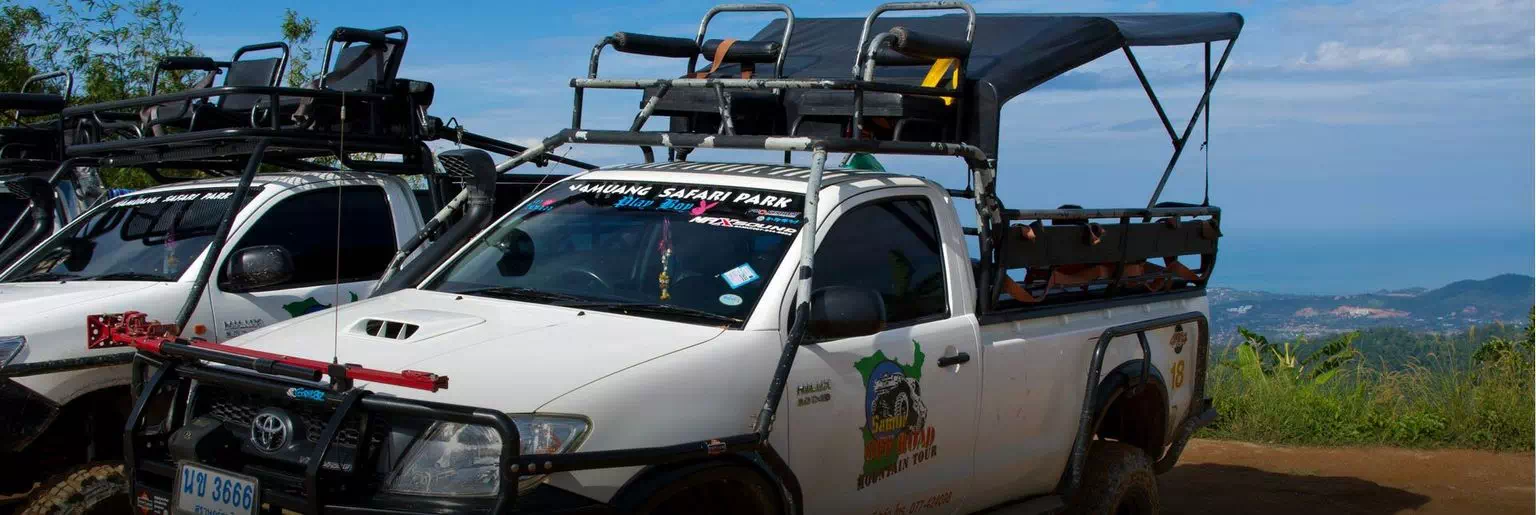
If the real reason you wanted a scooter was to see the island, a day tour does the job well. The Koh Samui jeep safari from ฿1490 spends a full day on jungle, waterfalls, viewpoints and temples, with transfer and lunch included. The military jeep version, also from ฿1490, includes Wat Khunaram, Namuang Waterfall, the Secret Buddha Garden and Big Buddha. Either one covers more than most first-time riders would manage alone, without a single hairpin to worry about.
Choose the standard jeep safari for a relaxed look around the island, or the military jeep if a rougher ride and a more characterful day sound better.
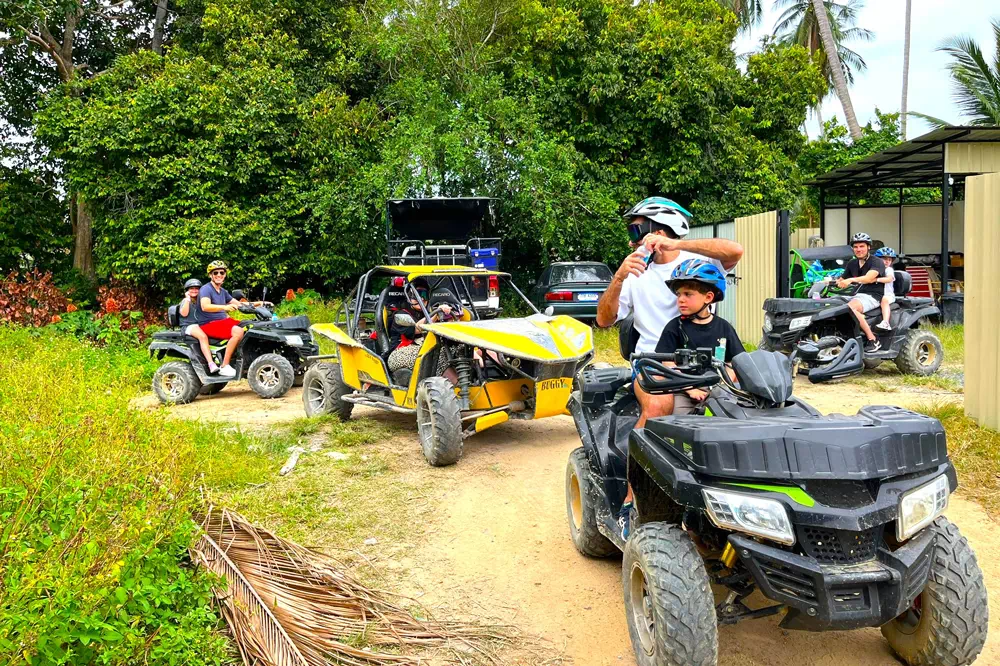
And if you were looking for an adrenaline rush, get it where someone is watching out for you. The Hawk Adventure zipline from ฿1690 and the ATV and buggy safari from ฿2190 both include hotel transfer, insurance and a full briefing before you start.
If you have the licence and the experience, enjoy it, as Samui is a beautiful island to explore on two wheels. Ride as if everyone around you has not seen you, because often they have not. Good easy targets for a first ride are short daytime trips on the northeast of the island, such as the Big Buddha temple. Go early, before the heat and traffic build.

These habits matter more than anything else in this guide:
If you are still undecided, leave it for the first few days. Take taxis, watch the traffic and see how the roads look from the back seat. You will have a much better idea of whether this is for you, and the scooter will still be there next week.
Shops set their own conditions and some do not ask many questions, but that says nothing about whether you are legal or insured. What matters is holding a valid licence for the vehicle. Young riders should check their insurance carefully first, as policies can have their own age limits.
An International Driving Permit is normally valid only together with your home licence and only for the categories shown on it. If it does not list motorcycles, it does not help you with a scooter. Check the current rules with your home licensing authority before you leave.
Yes, and that is exactly the trap. Many shops will rent to you without checking, but the legal and insurance risks remain yours. Being able to rent one and being allowed to ride one are two different things.
Prices change with the season, the shop and the length of rental, so compare two or three shops and ask about weekly rates. Check what is included, and ask about the deposit before you agree. Do not choose only on price, because a poorly maintained scooter is a false saving.
Get medical help first, and call the police if anyone is hurt or if there is a dispute. Take photos of the scene and the vehicles, contact your insurer as soon as possible and tell the rental shop. Stay calm, avoid signing anything you do not understand, and ask your hotel or embassy for help if you need it.
Ride-hailing apps do operate on the island, but availability can be patchy away from the busy areas and later in the evening. They are useful for seeing a fare up front. Download one before you arrive and keep a taxi number from your hotel as a backup.
A car, without much doubt, or simply taxis and tours with hotel pickup. Carrying children on a scooter is a risk I would not take on these roads, however short the trip. A car also gives you shade and somewhere to keep your bags.
Hotel pickup, insurance and a licensed local operator. Ask us anything on WhatsApp before you book.
Updated 16 November 2026.