WhatsApp
+66-957-269-990
- info@gosamuitours.com


A practical guide to the main night and walking street markets on Samui: which one runs on which evening, what to eat, how to bargain politely and how to avoid the worst of the crowds and heat.

It is Friday, the sun is getting low, and your hotel receptionist has just told you that half the island is heading to Bophut tonight. You have one free evening left and you are hungry, so which Koh Samui night market actually deserves it? The answer depends on the day of the week and how much you mind being carried along by a crowd.
Friday means Fisherman's Village, Sunday means Lamai, and Chaweng is your fallback on almost any evening. Maenam is the usual Thursday choice. Market days on Samui can and do change, so treat this table as a starting point and confirm with your hotel on the day.

I checked current guides and listings in November 2026 for this article, and they do not fully agree. Some list extra nights at Bophut, and one puts the Maenam market on a Monday. Nobody publishes one official schedule, so the table shows what most sources and local habit point to.
| Market | Usual day | Best for | The downside |
|---|---|---|---|
| Fisherman's Village, Bophut | Friday (some sources add other nights) | Atmosphere, food, souvenirs, beach views | The biggest crowds, hard parking |
| Lamai Walking Street | Sunday | Food and a more relaxed mood | Hot in the narrow lanes, less scenic |
| Maenam Walking Street | Thursday (one source says Monday) | A smaller, more local evening | Fewer stalls, quiet in low season |
| Chaweng night market stalls | Most evenings | Convenience if you stay in Chaweng | Tourist feel, souvenirs repeat |
| Nathon evening market | Most evenings | Local food near the pier | Small, little English, not a shopping trip |
Most of these get going around 5pm and wind down somewhere between 10pm and 11pm, but nobody blows a whistle. Heavy rain can thin out or cancel a market with little warning, especially in the rainy months, and some stallholders take holidays around Thai festivals.
Yes, once, and I would go even if you hate crowds. It is the best-looking market on the island, because the stalls run along an old street of Chinese wooden shophouses right beside Bophut beach. You get a proper sea breeze between the stalls, which you will not get elsewhere.
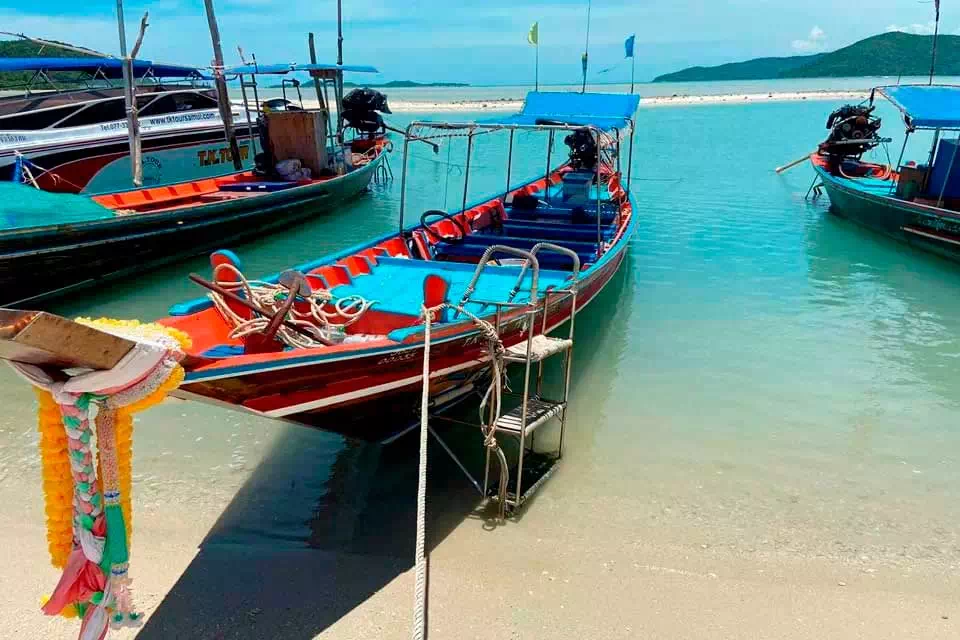
The downside is real. By about 7pm on a Friday the main street turns into a slow shuffle, and it can take a long time to walk its length. It is hard with a pushchair and tiring with small children. Pickpocketing is not a big issue here, but keep your phone and bag in front of you in the thick of it, as you would in any crowd.
Stalls sell clothes, soaps, carved wood, jewellery and plenty of souvenirs, mixed with some more original craft pieces. Food is everywhere: grilled prawns, coconut ice cream, sushi, roti and fruit shakes. Restaurants along the street also open for full dinners, and a table with a sea view is a good way to escape the crush, if you book ahead.
My advice is to come early. Arrive before sunset, walk the whole length while you can still move, eat at around 6pm, and be gone before the peak. Parking near Bophut is painful on Fridays, so take a taxi and agree the fare for the way back as well, because cars are harder to find late in the evening.
It is a smaller and cheaper-feeling version of Bophut, with more Thai families in the crowd. If food matters more to you than the view, Lamai is the Sunday market I would choose over a second trip to Fisherman's Village. The stalls run through the middle of Lamai town rather than along the sea.

You will find a long row of street food, with cheap clothes and phone cases around it, and sometimes a small stage with live music. The feel is less polished, and I like that. Southern Thai curries and rice noodles turn up here more often than in Chaweng, and you can eat well without spending much.
The downside is heat. With no sea breeze and a lot of grills going at once, the lanes can feel like an oven in the hot months, so give yourself breaks and carry water. Later in the evening the stalls start to run out of the popular dishes, so do not leave dinner until the very end.
Lamai also has an evening food area open on most nights in the centre of town, so a mid-week visit will not be wasted. Just do not expect the full walking street scene unless it is Sunday, and ask at your hotel if a mid-week market is running at that moment, as some listings mention one.
Choose Chaweng if you just want an easy dinner and some stalls close to your hotel. Choose Maenam if you want something slower and more local. Chaweng is about convenience, and Maenam is about atmosphere.
Chaweng's market stalls and food courts run most evenings, and they are the safe option when your dates miss the weekly markets. It is noisy and aimed squarely at tourists, with a lot of repeated T-shirts and souvenirs, but the food is fine and you can walk there from many hotels. I would not cross the island for it.
Maenam's walking street, usually listed on Thursdays, runs through the old Chinatown part of town near the pier. It is smaller and narrower, with many residents and long-stay visitors, so it is easier to walk and chat. It suits people staying on the north coast, and in low season it can be quite thin.
Because Maenam is where the listings disagree most, this is the one market where I would ask a local before driving over. Staff at any Maenam hotel or shop will know the answer straight away.
At the small evening markets, which rarely have a name in English and are not on many tourist maps. The Nathon evening market near the ferry pier is the easiest one for a visitor to find. It is not a shopping trip, just food: grilled meat, fish, curries in bags and sticky rice.
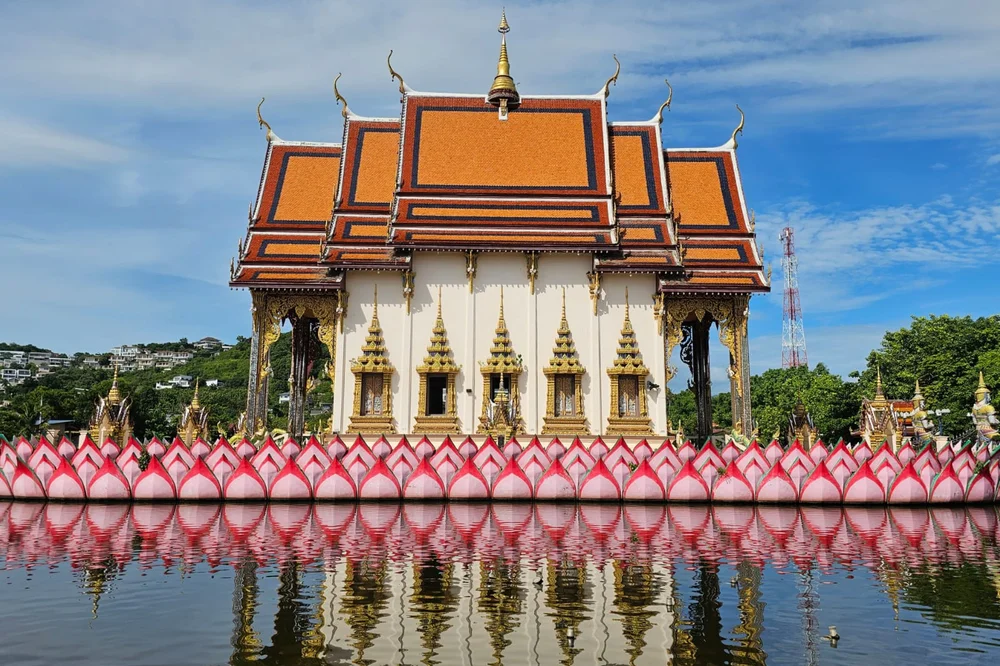
If grilled seafood is the point of your evening, Bangrak on the north-east coast has a run of simple places cooking prawns, squid and whole fish by the road. It is more restaurants than market, but it works well after a visit to Big Buddha and the temples nearby. Check the price by weight before they start cooking.
Every town on the island also has a fresh morning market, which is a different experience: fish on ice, fruit, herbs and coffee, with most of the action over by mid-morning. Go if you enjoy that sort of thing, but remember that you are walking through people's daily shopping, so keep out of the way and ask before photographing anyone up close.
Do not expect much English at these places. Pointing and smiling works fine, and sellers are patient. These markets also tend to shut early, so go soon after they open if you want the widest choice.
Go for anything grilled in front of you, plus a local dessert. Choose stalls with a queue of Thai customers, because fast turnover means fresher food. A lot of the food is sold in small portions, so you can try several things without getting full too fast.

These are the things I would look for on a first visit:
What to skip? I would pass on the rainbow-coloured sushi that has been sitting in the sun for hours, and on shakes with unknown ice from a stall with no customers. The fried insects are mostly there for your camera. If your stomach is sensitive, stay with food cooked hot in front of you.
Bring small notes, because a big one is awkward at a snack stall, and do not count on cards or transfers working for visitors. Plastic stools and tables are usually shared, so ask with a smile and sit down. Bins can be hard to find, so hang on to your rubbish until you see one.
Bargain only on clothes, souvenirs and other goods, and stay friendly from start to finish. Food prices are normally fixed, so do not try to haggle over a skewer. The same goes for any stall with printed price tags on everything.
A simple approach works. Ask the price, then ask "lot dai mai?", which means "can you discount?". If you are buying a few things, ask for one price for all of them, which usually works better than pushing hard on a single item. Smile while you do it, as a joke goes further than a tough face.
Only start bargaining if you actually want the item, and if you agree a price, buy it. If it does not work out, say "mai ao, khop khun" (no thanks, thank you) and move on, with no bad feeling. Sometimes the seller will call you back with a better offer, and sometimes not.
Keep your sense of proportion, too. The small sum you might be arguing over usually means more to the stallholder than to you. Getting angry or embarrassing someone in public is seen as very bad manners in Thailand, and it will not get you a better deal anyway.
Pick your market by the day first, then build a light day around it. Do something active in the morning, rest through the hottest hours, and arrive at the market around sunset. Doing a full-day tour and a Friday market back to back sounds great until you are walking through a crowd with sore legs.
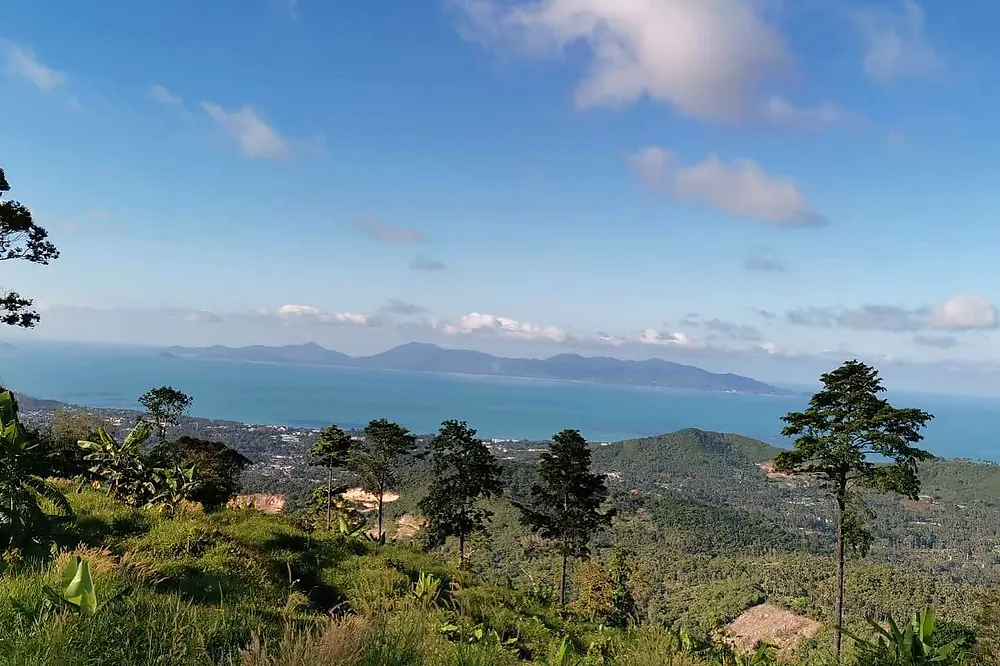
The heat does not really go away after dark, so here is a quick list for the evening:
A half-day trip fits this rhythm nicely. The morning Pig Island tour from ฿1490 has you back at your hotel between about 14:00 and 14:30, and the Samui Elephant Kingdom visit from ฿2890 takes about 4 hours including lunch. Either one leaves time for a rest before a market. The jeep safari from ฿1490 is a full 8-hour day, so I would save the market for the following evening.
For a morning on the water choose Pig Island, for an easy half day with animals choose the elephant sanctuary, and for your first look at the whole island choose the jeep safari.
One last check before you leave: ask your hotel if tonight's market is running, then look at the sky. If it is pouring, wait for a while, as rain here often passes, and many stalls will set up again once it stops. If you only have one night, Friday at Bophut is still the one I would choose. Questions about tours can come to us on WhatsApp or through the booking request on the tour page.
Around sunset is the sweet spot, when stalls are open and the crowd is still manageable. The markets generally get going around 5pm, and the busiest stretch tends to come after 7pm. Check locally, as these times can shift.
Yes, in the sense that something is open somewhere most evenings, usually in Chaweng and at small local markets like Nathon. The big walking streets are weekly, so they run on set days. Ask your hotel what is on tonight, because schedules can change.
Mostly not, so plan on cash. Food stalls and small sellers want baht in small notes, and some use Thai QR payment apps that visitors may not be able to use. ATMs are normally close by, though queues can be long on big market nights.
Generally yes, if you choose busy stalls and hot food cooked in front of you. Be more careful with seafood and salads that have been sitting out in the heat. Carry rehydration salts if your stomach is sensitive, and keep drinking water.
Yes, especially early in the evening, as children usually love the snacks and the lights. Fisherman's Village gets very crowded later on a Friday, and a pushchair becomes hard to move. Agree a meeting point with older children before you start walking.
Yes, though you may need to ask. Fruit, sticky rice desserts, roti and corn are easy choices, and many cooks can leave out the meat. Fish sauce is common, so say "mai sai nam pla" if you want to avoid it.
Taxis wait near the larger markets, but late on a Friday in Bophut they can be scarce and expensive. Agree the price before you get in, or use a ride-hailing app if it works in your area. If you have been drinking, do not ride a scooter home.
Hotel pickup, insurance and a licensed local operator. Ask us anything on WhatsApp before you book.
Updated 17 November 2026.