WhatsApp
+66-957-269-990
- info@gosamuitours.com


Koh Samui is a relaxed, friendly island where the serious dangers are mostly on the road and in the sea. Here is what actually goes wrong for visitors, and the simple habits that keep you out of trouble.

The man at the scooter shop in Chaweng slides the keys across the counter and never asks to see a licence. Ten minutes later you are in evening traffic on a wet road, in flip-flops, with a helmet that does not quite close. So is Koh Samui safe? Mostly yes, but that moment is where the answer gets complicated.
Yes, Koh Samui is safe for most tourists, and millions of people have a trouble-free holiday here. The things most likely to hurt you are traffic and the sea, not other people. Violent crime against visitors is uncommon, and the local mood is easygoing.
That does not make it a place to switch your brain off. Samui is a busy resort island with fast roads, rough water for part of the year, and the same tourist hustles you find in any popular destination. I have lived here for years and I still ride carefully, check the flags and agree taxi fares first.
Here is how I would rank the real risks, from the ones that deserve your attention to the ones that mostly cost you some money and a bad afternoon.
| Risk | How serious | What actually helps |
|---|---|---|
| Scooter and road accidents | High: the top cause of serious injury | Do not ride unless you are experienced, licensed and insured |
| Rip currents and rough sea | High in the rainy months | Obey red flags, swim where others swim, never go in drunk |
| Rental and taxi scams | Medium: costly, rarely dangerous | Take photos, agree prices first, keep your passport |
| Petty theft | Low to medium | Lock up valuables, keep bags off the scooter basket |
| Night-time trouble | Low, higher around heavy drinking | Plan your ride home, watch your drink |
| Dengue, sun, stomach bugs | Low to medium | Repellent, shade, water, travel insurance |
Because the roads combine inexperienced riders, fast pickups, sharp hills, sand on the corners and sudden rain. If you have never ridden a motorbike at home, Samui is not the place to learn. This is the one point in this article where I will not soften the message.
You will see the results on the island: tourists with bandaged knees and elbows, which locals call the Samui tattoo. Those are the lucky ones. Bad injuries and deaths do happen, and the ring road through Chaweng, Lamai and Maenam sees accidents all year, often at night or just after rain.
The legal side matters as much as the physical one. Thai law expects a valid motorcycle licence and a helmet, and an international permit needs to cover motorcycles. Police checkpoints are common. More importantly, many travel insurance policies refuse to pay if you were riding without the right licence, so a broken leg can become a very large private hospital bill. Read your policy before you ride, not after.
If you do ride, keep it boring. Wear a proper helmet that fastens, closed shoes and a shirt, stay off the road after drinking, slow down in rain, and avoid the steep back roads. Scooter rental details deserve their own article, but the short version is this: being able to balance on a bike is not the same as being able to ride one in traffic.
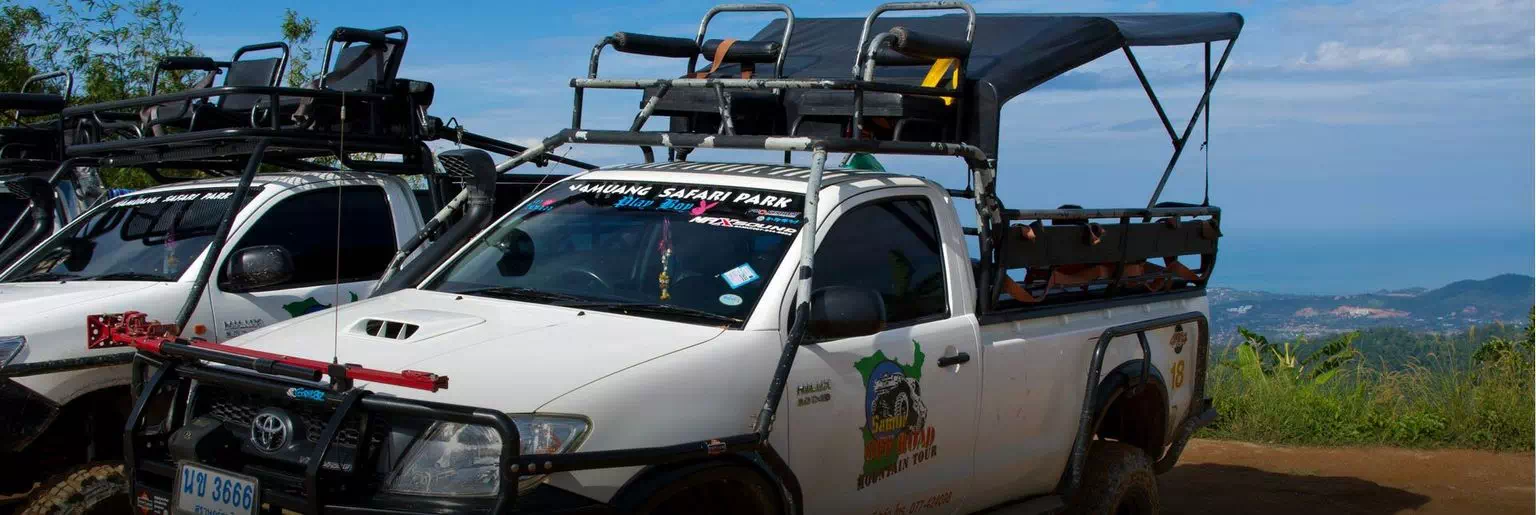
The alternatives are better than people think. Taxis and ride-hailing apps work in the main areas, and many hotels will arrange a car. To see the inland viewpoints without riding, a full-day jeep safari around the island from ฿1490 includes hotel transfer and lunch, and someone else does the driving.
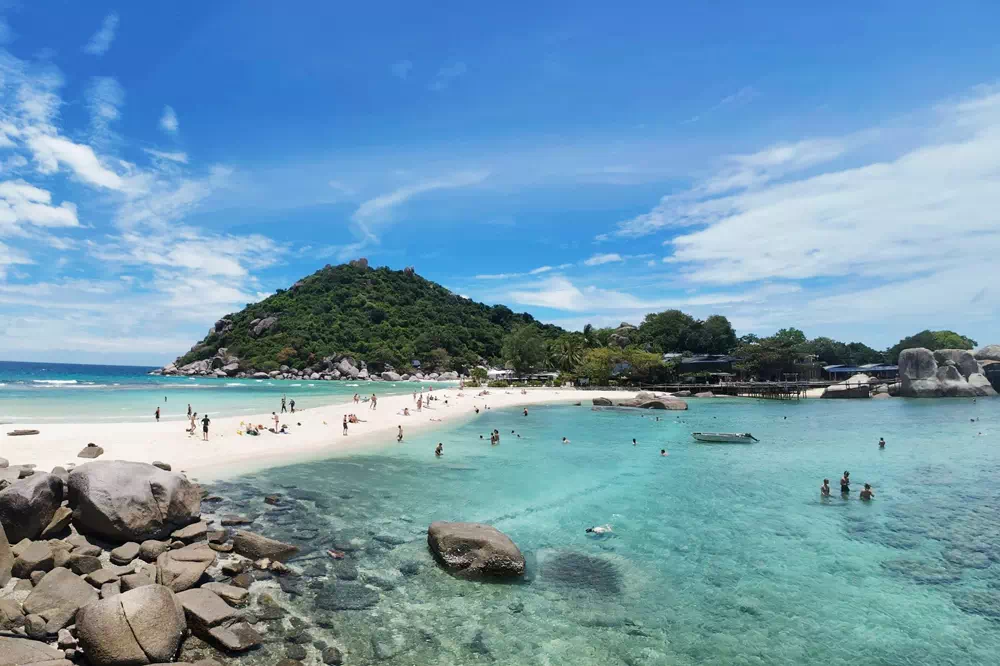
The sea is safe on calm days and genuinely dangerous on rough ones. A red flag means do not swim, even if the water looks fine and other people are in it. Lifeguards are not on every beach, so nobody may be watching.

Rip currents are the main concern, particularly on the east coast at Chaweng and Lamai during the rainy months, usually around November and December. If you want the detail, read about what November weather really looks like on Samui before you plan beach days. A rip feels like being pulled steadily away from shore, and it tires strong swimmers who try to fight it.
If it happens to you, do not swim straight back. Stay calm, float, swim parallel to the beach until the pull weakens, then head in. Raise an arm and shout if you need help. Most drownings involve alcohol, night swimming or people who ignored the conditions, so those three habits are worth dropping completely.
Jellyfish are the other thing to know about. Stings are usually minor, but box jellyfish have been recorded in the Gulf of Thailand and they are dangerous. Some beaches keep vinegar stations: pour vinegar on the sting, do not rub it, and get medical help quickly if the pain is severe or breathing changes.
Boats add their own rules. Sit where the crew tells you, wear the life jacket you are given, and if the sea looks too rough to you on the morning of a trip, say so and ask about your options. Speedboats slam in waves, which is unpleasant for anyone with a bad back and not suitable in pregnancy.
The classic Samui scam is the damage claim on a rental, followed by unclear taxi fares. Never leave your passport as a deposit, because it gives the shop all the power in any argument. Offer a cash deposit or a photocopy instead, and walk away if they refuse.

The rental version goes like this: you return a scooter or a jet ski, and the owner points at a scratch that was already there, then demands a large sum. Prevent it by filming the whole vehicle with the owner present before you leave. There is a full breakdown of the water version in our article on jet ski scams and rules on Samui.
Taxis on the island rarely use the meter, whatever the sign on the roof says. Agree the fare before you get in, and ask your hotel what a normal price looks like for your route. Prices are high compared with Bangkok, which is annoying but not a scam in itself.
Other things to skip:
Keep your anger in check if something does go wrong. Shouting makes things worse in Thailand, and a calm conversation with the Tourist Police present usually goes further than a scene on the pavement.
Petty theft exists but it is not a daily worry. Most thefts happen when valuables are left in plain sight: on a towel, in a scooter basket or in an unlocked room. A few small habits solve nearly all of it.
Phones and bags are the usual targets. Snatch-and-ride theft from scooters does happen, so wear your bag across your body on the side away from the road, and never put it in the front basket. On the sand, swim in turns if you are carrying anything you would miss.
Use the room safe, or the hotel front desk safe if your room does not have one. Keep a photo of your passport and insurance details on your phone and in your email. If you are in cheap shared accommodation, a small padlock is worth packing.
If something is stolen, report it to the Tourist Police and ask for a written report, because your insurer will want one. Do not expect to get the item back, but do expect people to be polite and to try to help.
Yes, in normal areas, as long as you treat alcohol with respect. Nearly all the night-time trouble I hear about starts with too many drinks and no plan for getting home. Beach roads, restaurants and hotel areas in Bophut, Maenam and Choeng Mon are quiet and calm.

The late-night strips in Chaweng and Lamai are louder and need more attention. Watch your drink, be careful with buckets because you cannot tell what is in them, and walk away from arguments, especially with bar staff. Fights with locals go badly for foreigners, whoever started them. Also remember that Thai drug laws can be harsh, so never accept anything from someone you just met.
The Full Moon Party on Koh Phangan deserves a separate warning: huge crowds, heavy drinking and a dark beach. Go with friends and have a meeting point. A Full Moon transfer with hotel pickup from ฿890 is far safer than trying to organise your own way home across the water at dawn.
Generally yes, and many women travel here alone without any problems. Use the same sense you would in any city at home: stay somewhere with good reviews and staff at night, take a car instead of a long walk along an unlit road, and avoid getting very drunk alone.
Unwanted attention is usually more tiresome than threatening, and a firm no is enough. Be careful with friendly strangers offering a lift or a private tour, and share your plans with someone. Group day tours with hotel pickup are a good way to explore and meet people without having to organise anything yourself.
Buy travel insurance that covers medical evacuation and any activities you plan to do. Private hospitals on Samui are good, but they want a guarantee of payment before they treat you properly. That one document changes everything if you have an accident.
Heat catches people out more than anything exotic. Drink water all day, use sunscreen, wear a hat and keep walks and viewpoints to the morning or late afternoon. Do not drink tap water; bottled or filtered water is everywhere, and ice in restaurants is normally fine.
Mosquitoes can carry dengue, especially in the rainy season, and they bite in the daytime as well as the evening. Use repellent and see a doctor if you get a sudden high fever with body aches. Check vaccinations with your own doctor before you travel, and bring any prescription medicines in their original packaging.
Stomach upsets are usually mild. Busy food stalls with fast turnover are often safer than an empty restaurant, so do not avoid street food out of fear. Just carry rehydration salts, and rest for a day if you need to.
Yes, because you know who you are dealing with and what you paid for before the day starts. A clear written price, a named tour and listed inclusions prevent most arguments. Go Samui Tours is a licensed agency (TAT 44/00444) selling tours run by local operators, so read this knowing that we have an interest, then check any seller using the same list.
A good tour does not make adventure risk free. It does take away the things that cause most trouble: getting there on a scooter, negotiating with a stranger and guessing what happens if someone gets hurt. Before you book anything, from anyone, ask these questions:
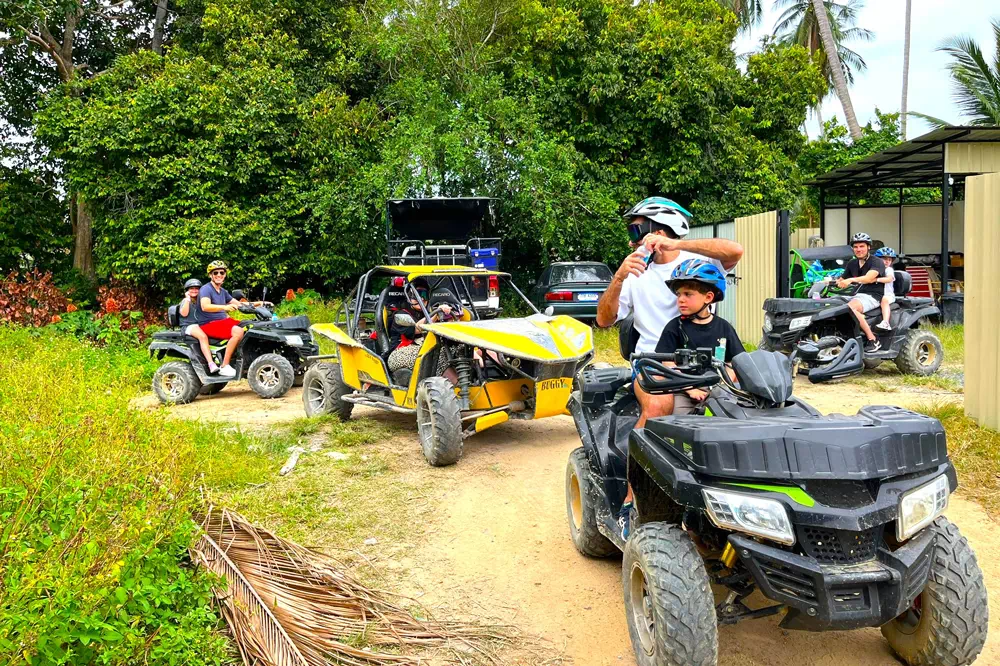
As examples, the Hawk Adventure zipline from ฿1690 includes hotel transfer, accident insurance, a full safety briefing and at least two instructors on the route. The ATV safari from ฿2190 includes a helmet, training, insurance and a guide. On the jet ski safari, priced at ฿5990 per jet ski, independent driving starts at age 14, and the price includes a life jacket and an instructor.
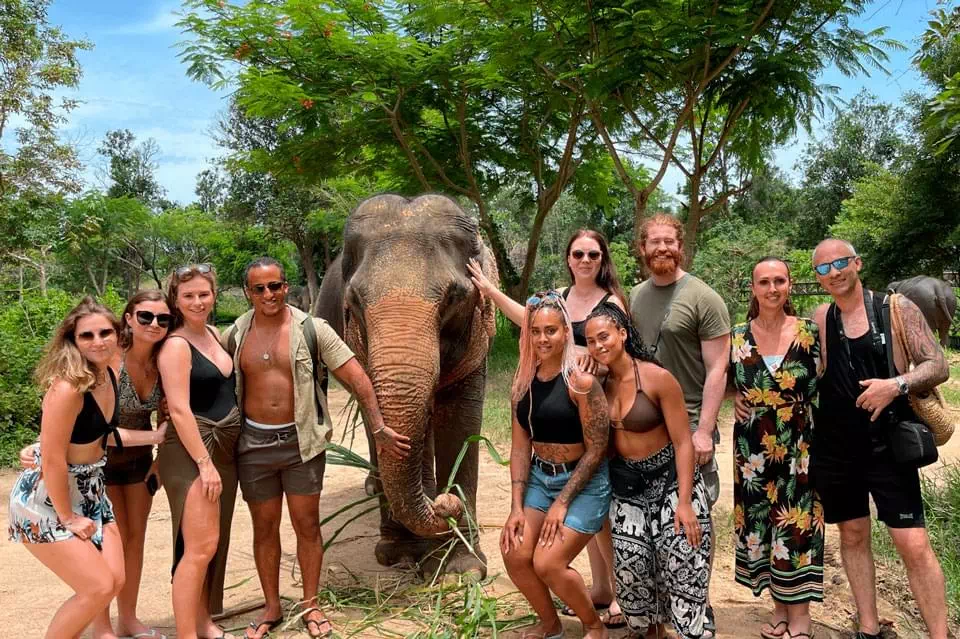
For a low-risk day, the elephant sanctuary is the easy choice, the zipline suits people who want a thrill with close supervision, and the jeep safari suits anyone who wants to see the island without riding themselves.
Before you land, do three small things: save your insurance policy on your phone, photograph your passport, and decide now whether you will really ride a scooter. Get those right, and Samui is one of the easiest places in Thailand to relax. Questions about a tour can go to us on WhatsApp or through the booking request on the tour page.
Yes, I would not come without it. Private hospital care is expensive, and evacuation costs far more. Check that your policy covers motorbikes and water sports if you plan to do them, because exclusions are common.
No, stick to bottled or filtered water. Most hotels provide it, and refill stations are easy to find. Brushing your teeth with tap water is fine for most people, but use bottled water if you have a sensitive stomach.
Yes, families do very well here if they choose calm beaches and avoid riding with children on scooters. Hire a car with a driver and check child seat availability in advance, because seats are not standard. Bophut and Choeng Mon are quieter options than central Chaweng.
Serious encounters are rare. Stray dogs can be a nuisance at night, so give them space and see a doctor about rabies shots after any bite or scratch. Snakes live in the jungle but usually avoid people, so wear closed shoes on trails.
Contact your hotel first, as staff can help with translation and calls. The Tourist Police handle complaints from visitors and speak English, so save their hotline before you travel. For a medical emergency, ask the hotel to call a private hospital ambulance straight away.
Generally yes, but choose ATMs attached to banks or big shops and shield your PIN. Tell your bank you are travelling, and carry some cash for small places. Keep an eye on your card when it is taken out of sight in bars.
Yes, but take more care on the roads and in the sea. Rain makes corners slippery, and the east coast beaches can have strong currents around November and December. Some boat trips may also change or cancel because of the conditions, so keep your plans flexible.
Hotel pickup, insurance and a licensed local operator. Ask us anything on WhatsApp before you book.
Updated 24 November 2026.