Samui Elephant Kingdom: What Actually Happens on a Visit
Samui Elephant Kingdom is the ethical elephant sanctuary most visitors to Koh Samui end up at, and knowing what actually happens there, hour by hour, makes the visit far less of a gamble.
Samui Elephant Kingdom: What Actually Happens on a Visit
Published · 9 min read
The short answer
Samui Elephant Kingdom is a no-riding, no-chains sanctuary where elephants roam over 4 hectares of jungle and choose whether to approach guests.
The standard visit runs about 4 hours and includes hotel transfer, hand-feeding, the 400-metre Skywalk bridge and a buffet lunch, from ฿2890.
You prepare food for the elephants yourself and feed them by hand, so expect to get a bit dirty, especially around the hands and feet.
There is no swimming or scrubbing elephants in a pool as a guest activity; the highlight is the Skywalk and close-up feeding, not bathing with them.
Closed shoes, light clothes you don't mind staining, and sunscreen are the three things worth getting right before you go.
Somewhere between the third minibus pickup and the first smell of jungle and elephant dung, most people stop checking their phones. That's usually the sign a visit to Samui Elephant Kingdom is about to be worth the early start. This is a walk-through of what the hours actually look like, not just what the brochure promises, including the parts nobody mentions until you're standing there with rice paste on your hands.
What is Samui Elephant Kingdom and why does "ethical" matter here
Samui Elephant Kingdom is a sanctuary on Koh Samui where elephants live without chains and without riding, spread across more than 4 hectares of jungle. The elephants here were rescued from logging camps or tourist shows, and the whole point of the place is to undo some of that damage, not repeat it.
That distinction matters more than it sounds. Riding puts weight and gear on an elephant's spine for hours at a time, often with a heavy wooden or metal seat strapped on regardless of how the animal feels that day. A sanctuary like this one lets the animals set the pace instead: they choose whether to come close to the walkways, when to head to the pool, and how long to spend foraging in the undergrowth before wandering back toward the feeding platforms.
If you've travelled elsewhere in Thailand and seen elephants painted up for photos, chained between performances, or carrying benches up a hill in the heat, this is the opposite model. It's also the reason we only sell the no-riding version of elephant tourism on Koh Samui: once you've watched a herd move on its own schedule, the alternative is hard to unsee.
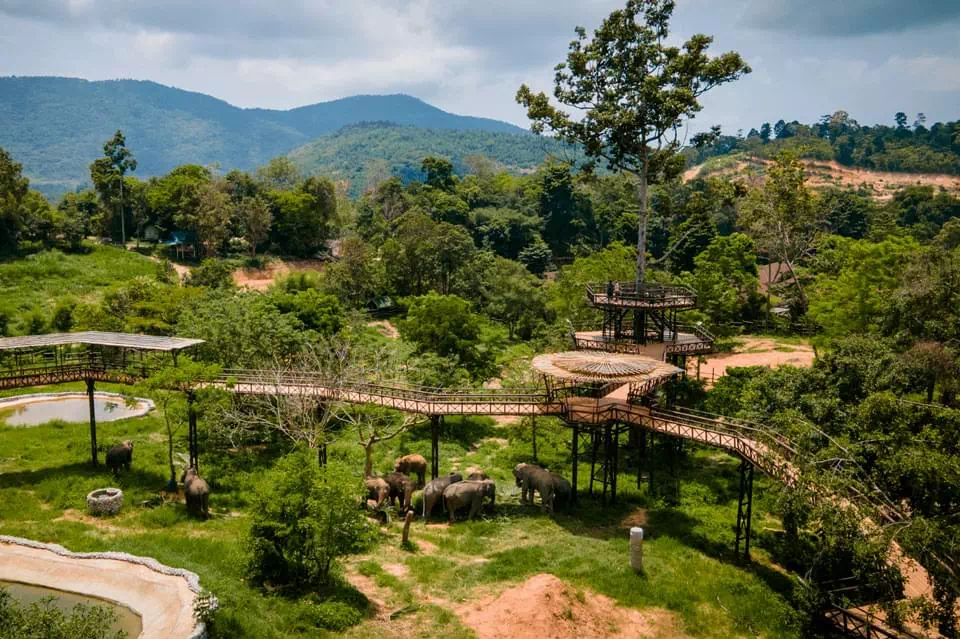
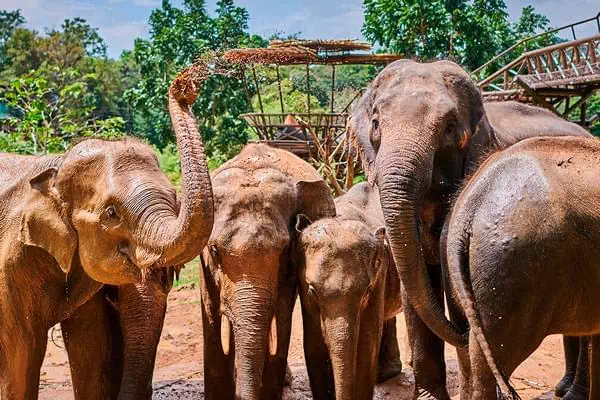
Elephants gather under the walkway on their own terms, not on a schedule set for photos.
How does the pickup and arrival work?
A minivan collects you from your hotel and brings you to the sanctuary, and the whole visit from pickup to drop-off runs about 4 hours. Pickup areas are grouped by zone, so depending on where you're staying you may share the van with guests from nearby hotels, which is normal and doesn't change the time you spend at the sanctuary itself.
On arrival there's a short check-in, a welcome of tea, coffee and snacks, and a briefing before anyone goes near an elephant. The briefing isn't just a formality either. The guide explains how elephants behave, what the rescued herd went through before arriving at the sanctuary, and how to read an elephant's mood and body language, which matters once you're standing a few metres from a three-tonne animal with its trunk out and clearly expecting food.
Most groups are mixed nationalities, and the guides tend to work in English with enough patience to repeat instructions for anyone who missed them the first time. If you're travelling with older children, this is also the point where staff will usually flag anything specific to keep in mind for younger guests.
What happens during the feeding part?
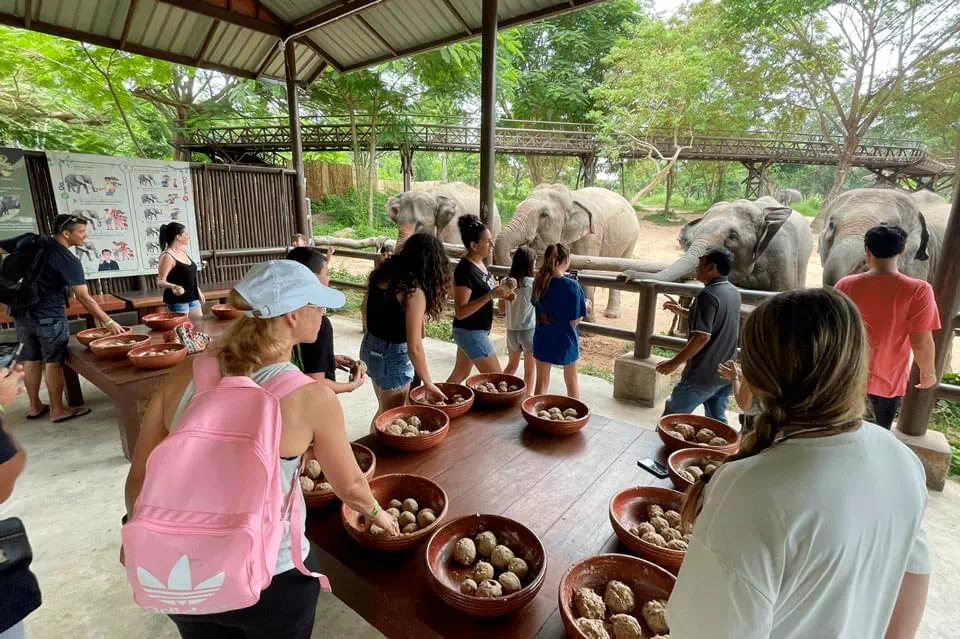
You make the food before you feed it: guests prepare "health balls" of rice, herbs and spices under guidance, then hand-feed the elephants directly from their palms. This is the most hands-on part of the day, and also the messiest, so it's worth knowing what to expect before your hands are covered in rice paste and you're trying to hold a phone at the same time.
The preparation itself is simple and doesn't take long: a guide shows the group how to mix and roll the ingredients, and most people pick it up within a couple of tries. What takes longer is the feeding itself, because elephants are not shy about asking for more, and a trunk reaching toward your basket feels a lot more immediate in person than it looks in photos.
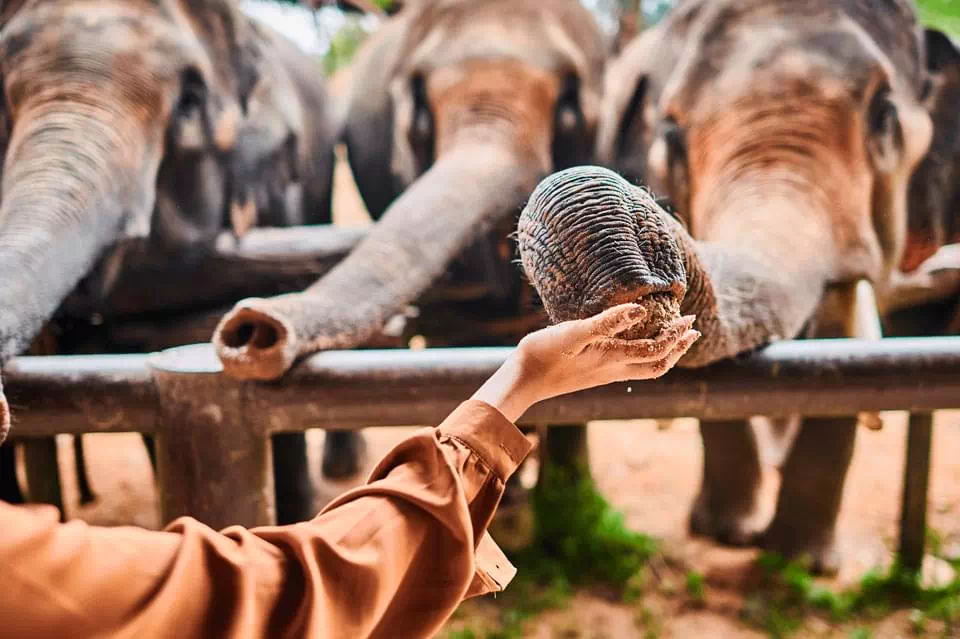
Expect trunks reaching toward you, a bit of slobber, and the occasional elephant that clearly knows exactly how this works and will angle for a second helping before you've finished giving the first. It's calm rather than chaotic, since staff who know every elephant's personality keep things moving and step in if any one elephant starts crowding, but it is close contact, not a view from behind a fence.
Guests are given a basket of treats after the main feeding and can continue feeding from the walkways at their own pace.
Staff who know each elephant by name stay close throughout, which keeps things calm even with a full group around.
Photos here tend to be the best of the day: eye-level trunk shots are hard to get anywhere else on the island.
If you're nervous around large animals, standing slightly further back on the platform still gives a clear view without the direct contact.
This is the moment most people remember, trunk and palm a few centimetres apart.
What is the Skywalk and is it worth doing?
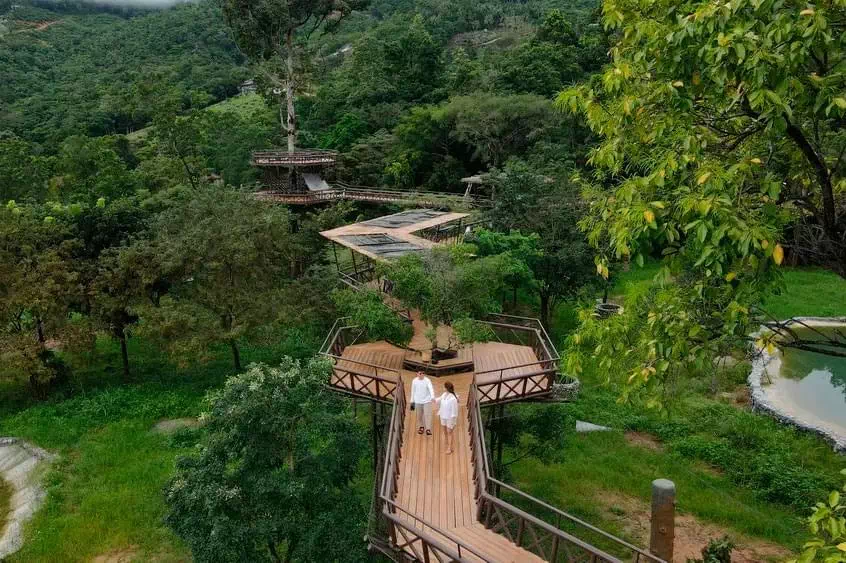
The Skywalk is a 400-metre suspension bridge that runs above the sanctuary, and it's the best vantage point for watching elephants behave naturally rather than performing for a crowd below. From up there you can see them forage through the undergrowth, interact with each other the way a real herd does, and head to the pool without a single guest standing anywhere near them.
It's worth doing slowly rather than rushing through for photos. There are shaded rest points along the bridge, and the view down into the jungle canopy is good even on a day when the elephants happen to be keeping their distance from the walkway itself. Some visitors treat the Skywalk as a five-minute photo stop and miss the point of it, which is really to watch the herd behave without being the reason they're moving.
Bring a camera with a decent zoom if you have one, since the best shots from the bridge are often of elephants at a distance rather than right underneath it. The bridge floor does have some give to it as people walk, which is completely normal for this kind of structure but worth knowing if anyone in your group isn't keen on heights.
The bridge gives a different angle than ground level, and it's shaded most of the way.
Is there mud, bathing or swimming involved?
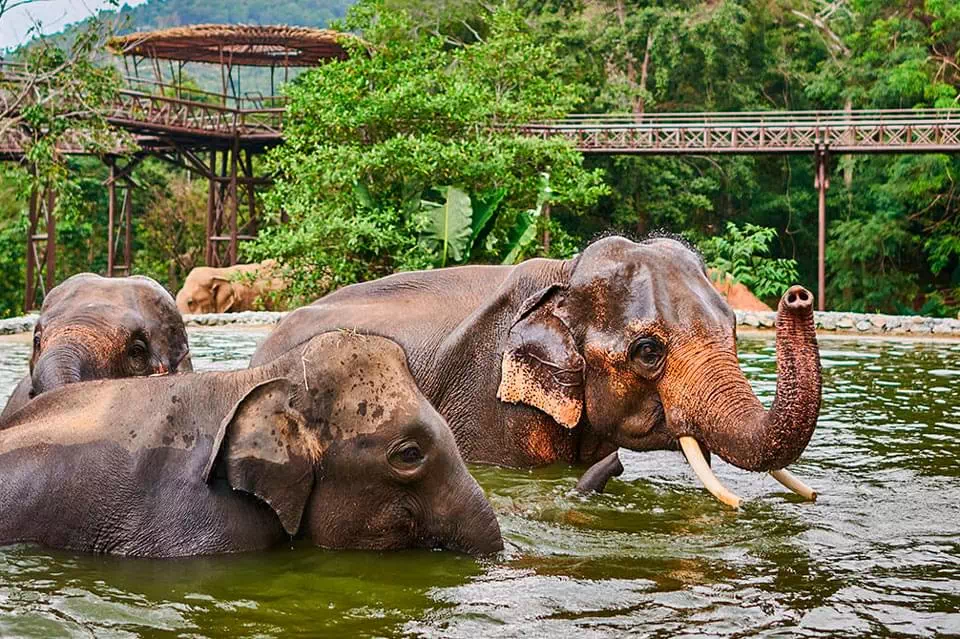
Some elephants will be in the pool or a mud wallow when you're there, and you can watch this from the walkway or from ground level, but it's not set up as a guest activity where you scrub or swim alongside them. If a sanctuary advertises guests bathing and scrubbing elephants as the main event, that's worth questioning, since forcing elephants into a pool on a fixed schedule for guest entertainment isn't that different from the old riding-and-photo-prop model it's supposed to replace.
What you will get dirty with is the feeding: banana, rice balls and direct trunk contact leave marks on hands, and sometimes on clothes if an elephant decides to get affectionate or simply misjudges where its trunk ends up. Flip-flops and white linen are not the move here, no matter how good they'll look in the itinerary photos beforehand.
The mud wallow area in particular tends to be a popular stop for photos even without direct contact, since elephants rolling and splashing make for some of the liveliest footage of the whole visit. If you want video rather than stills, this is usually the better moment to switch your phone to record instead of trying to catch a single still frame.
Watching from a distance, the pool time is clearly on the elephants' own schedule, not a guest photo op.
What should you wear and bring?
Closed-toe shoes are the one non-negotiable, since you'll be walking on uneven jungle ground and sometimes near mud or shallow water. Beyond that, think light, quick-dry clothes you don't mind staining, because rice, mud and trunk slobber are all realistic outcomes somewhere in the four hours.
Bring
Why
Closed-toe shoes
Jungle paths and wet ground near the pool and feeding areas
Sunscreen and a hat
Long stretches outdoors with little shade on the Skywalk
Insect repellent
Jungle setting means mosquitoes, especially near water
A camera
Feeding and Skywalk shots are the best photo opportunities of the day
A change of shirt (optional)
Feeding can leave marks on clothing
Small cash
Useful for drinks or extras at the sanctuary café if you want something beyond what's included
What's included and what does lunch look like?
The tour includes hotel pickup and drop-off, welcome tea and coffee, snacks, and a full buffet lunch, on top of the feeding and Skywalk experience. Lunch is served at the sanctuary after the main activities, at an open-air restaurant with a reasonable spread of rice dishes, salads and local favourites, giving everyone a chance to sit down, cool off and compare photos before the ride back.
Heat is the other honest downside worth naming here: this is outdoor jungle terrain in a tropical climate, so a late-morning or midday visit can feel long if you're not used to the humidity. Bring water, pace yourself on the Skywalk rather than rushing the whole 400 metres in one go, and use the shaded rest points along the way instead of pushing straight through to the end.
Here's a rough shape of the day, though exact timings can shift slightly depending on your pickup slot:
Hotel pickup and transfer to the sanctuary
Welcome tea, coffee, snacks and safety briefing
Preparing food and hand-feeding the elephants
Walking the 400-metre Skywalk bridge above the sanctuary
Time at ground level near the elephants and pool area
Buffet lunch and transfer back to the hotel
Full pricing and the complete schedule are on the Samui Elephant Kingdom tour page, which is worth checking before booking since it lists exactly what's covered and what isn't.
How does this compare to other animal experiences on Samui?
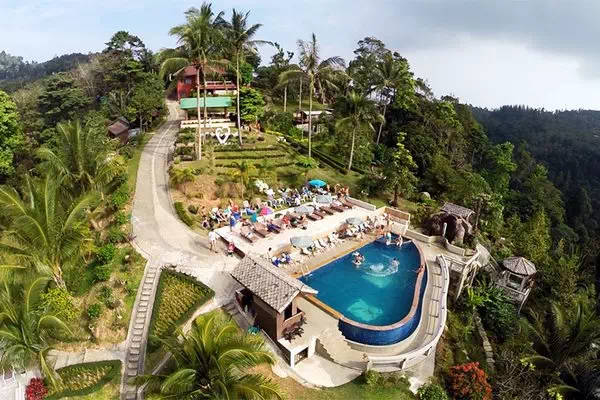
If elephants aren't quite the plan for the whole day, there are other ways to see animals around the island without riding or performance involved. Paradise Park Farm is a smaller, calmer stop with local animals and birds and a swimming pool, more of a relaxed half-day than a wildlife encounter, and it suits families who want something gentler after a big morning out.
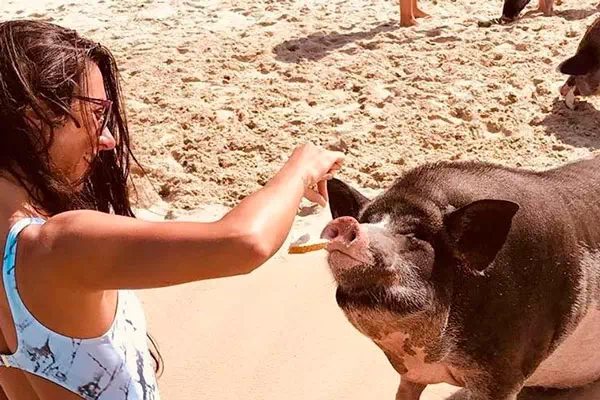
For sea life instead of land animals, the Pig Island tour to Koh Madsum adds friendly pigs on a sandbar plus snorkelling over coral at Koh Tan, which suits people who want animals and a beach day combined into one trip rather than a jungle setting. Neither of these replaces the elephant visit, they're just worth knowing about if you're trying to fit more than one animal-focused morning into a short trip.
If you're combining this with other adventure activities on the island, the ATV safari and the Hawk Adventure zipline are the two most commonly paired with an elephant visit, since both run half-day and leave the other half of the day free. Pairing an afternoon zipline with a morning at the sanctuary is a popular combination for travellers who only have one full day free on the island and want to make the most of it without feeling rushed.
Who should skip it, and quick practical notes
Anyone hoping to ride an elephant should look elsewhere entirely, since that's not on offer here and never will be at a genuinely ethical sanctuary. People who overheat quickly or have real mobility limits should ask in advance how much walking the Skywalk and grounds involve, since it's outdoor jungle terrain with some uneven ground, not a flat paved path with handrails throughout.
Otherwise this is a calm, well-run half day that works for most ages and most fitness levels, and it photographs better than almost anything else on the island. Book ahead in high season, since pickup slots fill up quickly, and check the 10 Best Tours in Koh Samui page if you're still deciding how to spend the rest of the trip around it.
Frequently asked questions
Is Samui Elephant Kingdom really no riding?
Yes, there is no elephant riding at any point in the visit. Guests feed, walk near and observe the elephants, but the animals are never ridden or chained, which is the core of what makes the sanctuary ethical.
How close do you actually get to the elephants?
Close enough to hand-feed them directly from your palm, usually from a raised walkway or platform. Staff manage the distance and timing so it stays calm even with a group present.
Is it suitable for young children?
Most families do fine with children, since the pace is slow and the feeding happens from a safe platform. Parents with toddlers should still expect heat and some walking, so plan for breaks and shade.
Do elephants bathe in front of guests?
You may see elephants in the pool or a mud wallow during your visit, but it happens on the elephants' own schedule rather than as a guest activity like scrubbing or swimming with them. It's a highlight to watch, not something you're asked to join.
How long is the whole visit including transfer?
The full experience, from hotel pickup to drop-off, runs about 4 hours. That includes the briefing, feeding, Skywalk and buffet lunch.
What should I absolutely not wear?
Skip flip-flops, open sandals and anything white or precious, since the ground can be uneven and muddy and feeding can leave stains. Closed-toe shoes and clothes you don't mind washing twice are the safer call.
Can I combine this with another tour on the same trip?
Many visitors pair it with a half-day activity like the ATV safari or the zipline park, since the elephant visit itself runs about half a day. Check transfer times carefully if booking two tours on the same day so pickups don't overlap.
Is this the same as other elephant parks advertised on Koh Samui?
No, and it's worth checking any elephant experience carefully before booking. We only sell the no-riding, no-chains version of Samui Elephant Kingdom, and a separate article on choosing an ethical sanctuary goes into how to tell the difference elsewhere on the island.
Ready to book?
Hotel pickup, insurance and a licensed local operator. Ask us anything on WhatsApp before you book.