WhatsApp
+66-957-269-990
- info@gosamuitours.com


A practical food guide for your first days on Koh Samui: the dishes to order, the southern specialities most visitors miss, how to handle the spice, and where to eat without worrying about your stomach.

It is your first evening on Samui, the menu in front of you has ninety dishes with photos, and the waiter is waiting. You point at pad thai, because it is the one you know, and it is fine. But the honest answer to what to eat in Koh Samui is longer and much more interesting than pad thai, and a few simple words make the whole island's kitchen open up.
I have eaten my way around this island for years, from market stalls to beach shacks to grandmother-run curry shops. This guide covers the dishes worth ordering, the southern food most visitors never try, how to survive the spice, and where to eat without regrets.
The best dishes to start with in Koh Samui are the Thai classics that every local kitchen does well: stir-fries with holy basil, sour and spicy soups, coconut curries and grilled meat with sticky rice. Learn these ten and you can order confidently almost anywhere.
Pad thai is on every menu too, and it is a good dish when made fresh. Just know that the version on tourist strips is often sweet and soft, and the stir-fries above are where local cooks really shine.
A tip on ordering: Thai meals are shared. Order two or three dishes for two people plus rice, put them in the middle, and take a little of each. That is how the flavours are designed to work together.
Samui is in southern Thailand, and the south has its own cooking: hotter, more sour, heavy on turmeric and fresh fish, with strong Muslim and Malay influences. These dishes are the real taste of the island and rarely appear on menus in English.

Southern curries are some of the spiciest food in Thailand, so try them with a local's warning, not on bravado. Here are the ones worth hunting for:
The best places for these are small local restaurants in Nathon, Lamai and the Muslim fishing village of Hua Thanon, and morning markets where curries sit in big pots and you point at what you want. The food is cheap and cooked for Thai customers, so taste before you dive in.
My honest view: if you only try one southern dish, make it khao mok gai for comfort or gaeng som for the real thing. And keep a cold drink nearby when you do.
The best seafood on Samui is at simple local seafood restaurants near the fishing villages and at night markets, not at the fanciest beachfront tables. Fish, squid, prawns and crab come in daily from the Gulf of Thailand, and freshness matters more than decor.
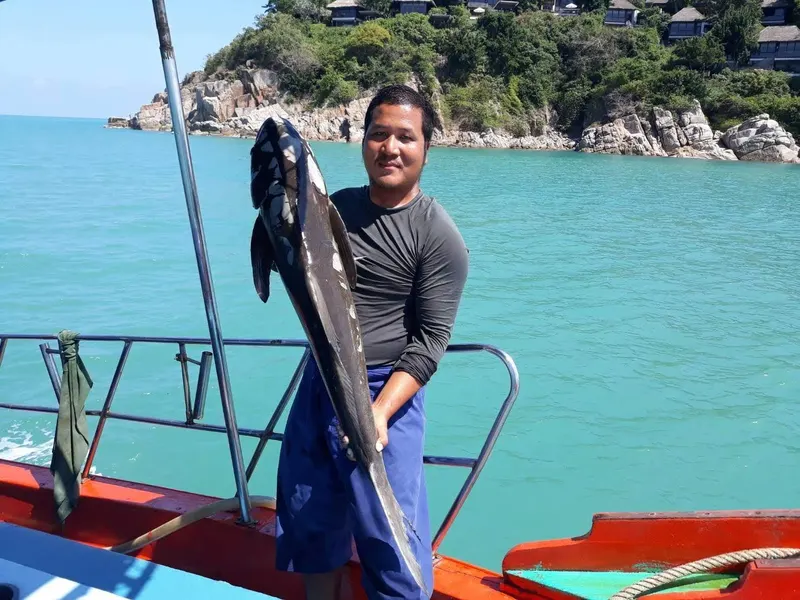
Good dishes to order: pla neung manao (whole fish steamed with lime, garlic and chilli), pla tod (crispy fried fish), grilled squid, prawns with garlic and pepper, and hoi lai pad nam prik pao, clams stir-fried with chilli paste and basil. Crab curry and crab fried rice are also widely loved.
The important rule: seafood displayed on ice is usually priced by weight, so ask the price before they cook it. Point at the fish, ask for the weight and the final price, and only then say yes. Most places are honest, but a few beach restaurants count on visitors not asking.
Check that the fish looks fresh: clear eyes, red gills and no strong smell. In the evening heat, seafood that has sat out all day is the one thing I would skip, especially raw oysters and shellfish.
Fisherman's Village in Bophut and the Lamai area have plenty of seafood places with tables near the sand. Prices are higher there than in local spots inland, which is the cost of the view. For the best value, look for busy places full of Thai families.
Thai food on Samui ranges from completely mild to very hot, and the word that controls it is "phet", which means spicy. Say "mai phet" (not spicy) or "phet nit noi" (a little spicy) when you order, and most cooks will adjust.
Restaurants on tourist strips already tone the spice down, sometimes too much. Local places cook for Thai tastes, so even "a little spicy" in a local kitchen can feel hot to a visitor. Start low and add more with the condiments on the table.
| What you want | What to say | Good dishes for this level |
|---|---|---|
| No chilli at all | Mai phet, mai sai prik | Khao pad, pad see ew, tom kha gai, khao mok gai |
| A little heat | Phet nit noi | Massaman curry, pad krapow, larb |
| Medium | Phet panglang | Green curry, tom yum, som tam |
| Thai style | Phet baep Thai | Gaeng som, kua kling, som tam Thai |
The condiment set on every table lets you fine-tune: fish sauce with chilli for salt and heat, chilli flakes, sugar and vinegar with chilli. Thais add a little of each to their noodles, and you can too.
If you overdo it, do not drink iced water, which spreads the burn. Plain rice, cucumber, a sip of something sweet or a mouthful of a coconut dish calm it down faster.
Try fresh coconut, mango sticky rice, rambutan, mangosteen and coconut ice cream. Samui was a coconut island long before it was a tourist island, and the coconut here is a big part of the food.

Fruit stalls sell cut fruit in bags with a skewer, which is perfect for a beach snack. Mango, pineapple, watermelon and dragon fruit are available most of the year, while mangosteen, rambutan, longan and durian appear in their seasons, mostly from around April to August.
Desserts worth trying: khao niao mamuang (mango with sticky rice and coconut cream), khanom krok (little coconut pancakes cooked in a dimpled pan at markets), roti with banana, and coconut ice cream served in a coconut shell. Mango sticky rice is at its best in mango season, roughly March to June, when the fruit is sweet and cheap.
For drinks, try a young green coconut, Thai iced tea (cha yen), iced coffee with condensed milk, and fresh fruit shakes. If you want to see how coconuts are grown and used on the island, the coconut farm and museum on Koh Samui is a fun stop.
About durian: it smells strongly and is banned in many hotels for that reason. Try it once at a fruit stall, outside, and decide for yourself.
Eat at night markets for variety and price, at local family restaurants for the best Thai cooking, and at beach places for the setting. Most people end up mixing all three, and that is the right approach.
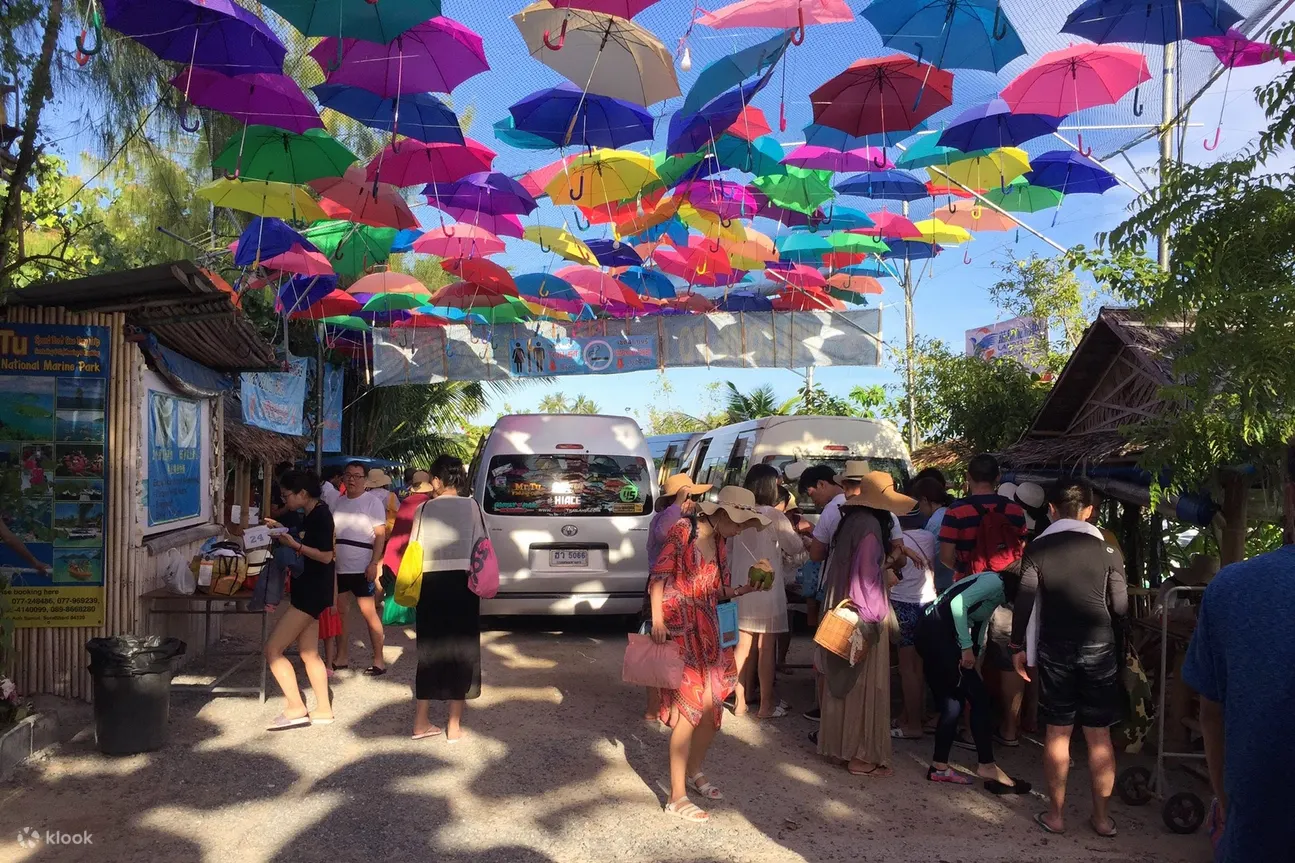
Night markets are the easiest way to try many dishes cheaply. The Fisherman's Village walking street in Bophut is usually on Friday evenings, Lamai has a popular Sunday market, and Maenam has a walking street on Thursdays, though days can change, so check locally. Go hungry and share small portions of everything.
Small family restaurants, often with a plastic menu and a TV in the corner, are where the cooking is best. Look for the ones full of Thai customers at lunchtime. A busy local restaurant is the best quality check on the island, because food moves fast and nothing sits around.
Beach places in Chaweng, Lamai, Bophut and Maenam are about the sunset, the sand under your feet and a relaxed dinner. The food ranges from excellent to tired, and prices are higher. Order Thai dishes rather than pizza and burgers, and you will usually eat well.
Hotel restaurants are fine but often cook Thai food very mild and charge resort prices. Use them for breakfast, then go out.
Street food on Samui is generally safe if you choose busy stalls where food is cooked fresh in front of you. Most stomach problems visitors get come from too much spice, heat, alcohol and sun at once, rather than from one bad meal.
Simple rules that work:
Allergies need real care. Fish sauce, shrimp paste and peanuts are used in many dishes, even ones that do not look like they contain them. Pad thai, som tam, massaman and many sauces may have peanuts, and curry pastes often contain shrimp paste.
If you have a serious allergy, carry a card written in Thai that explains what you cannot eat, and show it every time. Vegetarians can say "gin jay" (vegan, no meat, fish or animal products) or "mai sai nuea sat" (no meat), but double-check fish sauce. Gluten-free is hard because of soy and oyster sauces.
Yes, and some tours are among the best meals of a trip. Several day trips include a Thai lunch or dinner, and one lets you eat the fish you caught yourself.
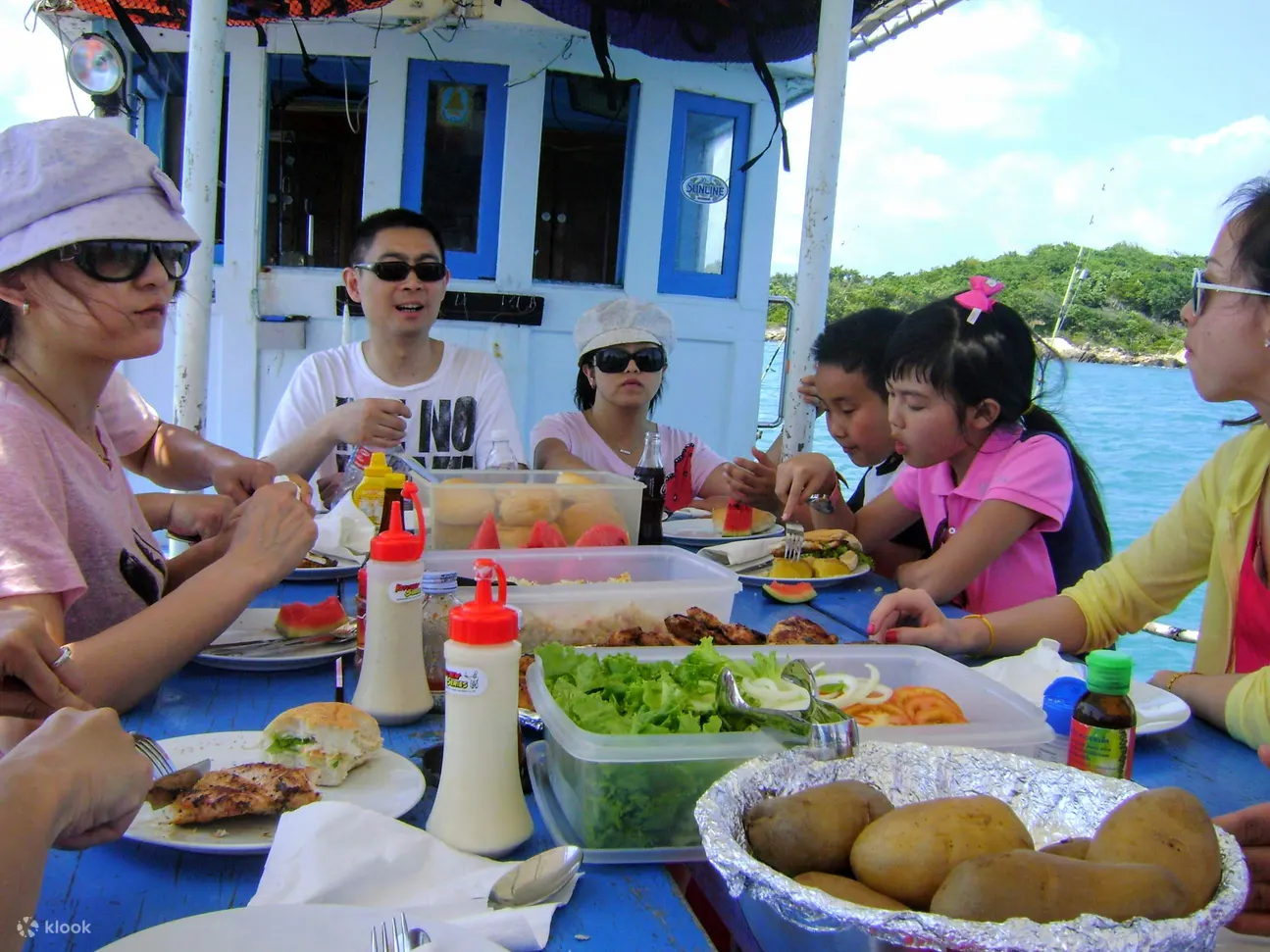
The sea fishing trip with Mr. Tu from ฿1690 spends 7 hours on a traditional Thai fishing boat and includes a BBQ lunch from your catch, gear, a fishing assistant and hotel transfer. For seafood lovers it is the freshest meal on the island, because the fish goes from the line to the grill.
The Koh Samui jeep safari from ฿1490 is a full-day island tour with jungle, waterfalls, viewpoints and temples, with transfer and lunch included. It is a good way to fit a simple Thai meal between sightseeing stops.
For an evening out, the Red Baron sailing cruises start from ฿2200 and include food and drinks, with a sunset dinner option. It suits couples who want dinner on the water rather than another restaurant.
Seafood fans will like the fishing trip, first-timers who want sights plus lunch should pick the jeep safari, and couples should look at the sunset cruise:
A practical plan for your first week: Thai breakfast at a market one morning, local lunches at busy family places, one night market, one seafood dinner with the price agreed first, and one meal on a tour. Learn "mai phet" and "aroi" (delicious) and the cooks will look after you. If you need help choosing a tour, send a WhatsApp message from any tour page.
Local Thai food at markets and family restaurants is cheap. Beachfront restaurants, hotel dining and imported food such as wine, cheese and steak cost much more. Eating mostly Thai food is the easiest way to keep your budget under control.
Yes. Many restaurants offer tofu and vegetable versions of curries and stir-fries, and there are vegetarian and vegan cafes in Chaweng, Bophut and Lamai. Ask for no fish sauce and no oyster sauce, because both are standard in Thai cooking.
No, do not drink tap water. Use bottled or filtered water, which is sold everywhere and often refilled from machines. Brushing your teeth with tap water is fine for most people.
Locals often eat rice soup (jok or khao tom), khanom jeen noodles with curry, or grilled pork skewers with sticky rice from a market stall. Iced coffee or tea completes it. Most hotels also serve Western breakfasts.
Many tourist and hotel restaurants add a service charge and VAT, which should be stated on the menu. Small local restaurants usually do not. Tipping is not required but leaving small change is appreciated.
Massaman curry, tom kha gai, khao mok gai, pad see ew, fried rice and grilled chicken with sticky rice are all mild. Say "mai phet" when you order to be safe. Mango sticky rice and fresh fruit are spice-free treats.
Try it once, from a fruit stall and outside, because the smell is strong and many hotels ban it. Some people love the creamy, sweet flesh and others cannot get past the smell. Do not mix it with alcohol, as locals warn it can upset the stomach.
Hotel pickup, insurance and a licensed local operator. Ask us anything on WhatsApp before you book.
Updated 7 November 2026.